
Copenhagen is known for a few iconic items – bikes, the real Little Mermaid, and fantastic architecture, to begin. There are also rumours about the cost of visiting Denmark’s capital city. Are they true? Is Copenhagen expensive to travel to? The Nordic country is a member of the European Union, although it does not use the Euro. Instead, Denmark has held on to its own currency, the Danish Kroner (DKK). Canadians travelling abroad to Europe already have a bit of a pill to swallow with the currency conversion, but how does the Danes’ Krone compare? In this blog post we’ll dive into the nitty gritty on what to expect and how to budget for your trip to Copenhagen. After spending a weekend in the Nordic capital, I’ll give you an honest answer, complete with a breakdown of what I spent and the average price of items like food, transportation, and activities.

✅ TLDR: Short on time? Here are my top finds for your Copenhagen trip!
🛎️ Find awesome Copenhagen hotels
🚙 Rent a car
🎟️ Book the best tours
🥦 Secure travel insurance
🛍️ Shop my favourite travel products
🌟 Follow Travel with TMc on IG
Disclaimer: This post includes affiliate links. At no extra cost to you, these links provide a small commission to allow this website to continue building helpful and interesting content. Thank you for supporting Travel with TMc, whether through sharing the content you enjoy or using the links. It is much appreciated!
Where is Copenhagen, Denmark?
Copenhagen is located on the west coast of the country along the Øresund Strait and facing Malmø, Sweden.
Why is Copenhagen Expensive?
In 2023, Forbes listed Copenhagen as the 8th most expensive city in the world to live in, tied with Tel Aviv. It was one of only 4 European cities to make the top 10 ranking, alongside Zurich (2), Geneva (4), and Paris (7). There are a few reasons why it’s so expensive: global inflation, the second highest VAT in the EU (value-added tax, also known as “moms” in Danish), and a high standard of living thanks to well-distributed taxes to various social services.
The average Danish resident is taxed roughly 50% of their salary. To North Americans this may seem outrageous. However it’s clearly working for the Danes as their government effectively redistributes the funds for public social services as they should. Many health services, excluding dental, are covered, as is education and even university. Imagine that! In the working world, the standard amount of paid annual holiday time off is 5 weeks. Additionally, Denmark has less income inequality compared to the rest of the world, which has resulted in lower crime rates and homelessness. I don’t know about you, but forget visiting Denmark – I want to move there!
Pro Tip: Save your receipts! With regards to the VAT, Canadians and other non-EU residents can receive a tax refund upon their departure when you spend at least 300 DKK on a single purchase.
When is the Best Time of Year to Visit Copenhagen?
The best time of year to visit anywhere is subjective and depends on the weather you enjoy and the crowds you care to tolerate. Copenhagen is pricey, regardless of the month. Keep in mind it will be harder to find accommodation during peak seasons (mid-June to the end of August and Christmas time) vs the off-season (mid-January to the end of March). Definitely book ahead to secure a spot and avoid paying last-minute prices.
Of course, summertime has the warmest weather, with temperatures ranging from 16 to 22 degrees Celsius between May and September. The saying goes that it rains every second day in Copenhagen, so keep that in mind when trip planning. In the winter, wet snow and wind are common in the capital, as would be expected in a coastal city. My biggest packing tip would be to bring layers.

Average Daily Cost for a Traveller in Copenhagen
Alright, let’s get into the cost breakdowns. Is Copenhagen expensive to visit? What does an average meal cost in Copenhagen? What about the cost of a beer / cider / wine? What’s the average cost that tourists pay to spend a day in this European capital? It’s important to note that the average daily cost for a traveller in Copenhagen can vary depending on where you fall on the scale from budget to luxury traveller. Assuming a middle ground trip budget, the average daily cost for a traveller in Copenhagen can range from 650kr per day to 1,400kr per day. Let’s take a look below at how we arrived at those totals.
Average Accommodation Costs in Copenhagen
A shared room in a hostel is around 200-360kr ($40-72 CAD) whereas a private room in a hostel costs roughly 800kr ($160CAD). That’s wild to me that a hostel could cost that much, but here we are in a post-pandy world. I stayed at the Danhostel in downtown right along the water and paid $153 CAD for 3 nights ($51 CAD per night) for a weekend in May.
Hotels, of course, are a different story and come at a higher price point. They start around 900kr ($180 CAD) per night and we all know the sky’s the limit with the upper end hotel prices. Airbnbs and similar short-term vacation rentals can cost around 1,100kr per night ($220 CAD) in the city centre.
Average Transportation Costs in Copenhagen
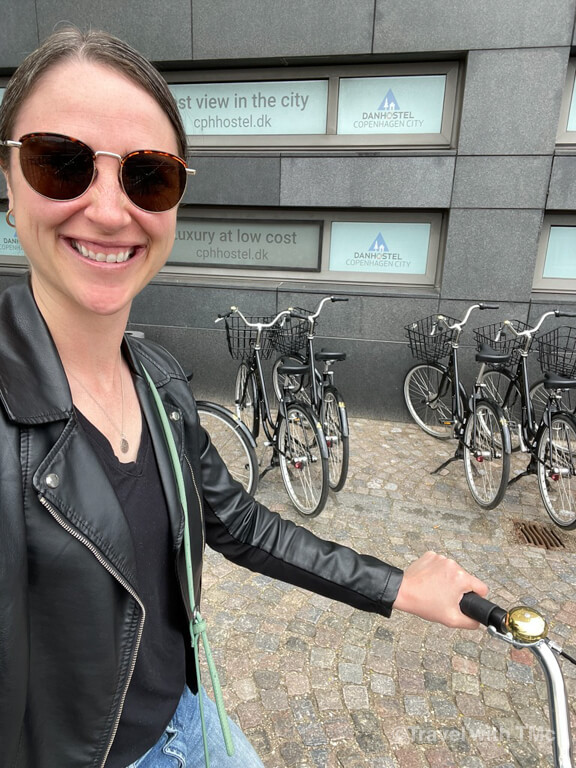
Public transportation in Copenhagen is fast, clean, and easy. It’s also quite affordable, with plenty of different ticket options. A 2-zone ticket in the city centre will cost ($…CAD). Another option is to rent a bike for a day or the duration of your stay. Some accommodation will include that in the cost where others like the Danhostel will charge a 24-hour fee. I paid 100kr ($20 CAD).

Average Food Costs in Copenhagen
I’m just going to say it. Eating in Copenhagen is not cheap. Even vendor stalls aren’t super budget, at least in my experience, though it’s always possible I missed some hidden gems. I think this may be where you see the wildest swings in cost variance. From cooking your own food or convenience store “meals” to dining out, there’s going to be a vast difference. With that being said, there are a few common markers to compare food costs between cities: a cup of coffee (roughly 25-50kr or $5-10 CAD), a pint of beer (about 40-75kr or $8-15 CAD), and dinner for 2 people (500kr or $100 CAD).

Average Attraction and Activity Costs
After transportation and accommodation, attractions and activities are often the next priciest part of trip budgets. Luckily there are many ways to reduce these costs! We’ll get to cost-saving tips below, but for now, here are the average costs of some of Copenhagen’s many attractions. There are many free activities to enjoy in Copenhagen and there are also several with entrance costs. Some free attractions are the Hans Christian Andersen’s The Little Mermaid, National Museum of Denmark, and The David Collection. Another fantastic free attraction is the Botanical Garden, except for an entrance fee to the Palm House and Butterfly House (same ticket).


Entrance fees for popular tourist attractions can be quite low in Copenhagen in some cases, like The Round Tower (25kr or $3.50 CAD) or climbing the spire at the Church of Our Saviour (69kr or $10 CAD). A little higher in cost, though nothing to break the bank, is the Danish Museum of Art & Design (130kr or $18.50 CAD) and Christiansborg Palace (160kr or $23 CAD). Then we have more chi-chi experiences like New Nordic Cuisine fine dining, luxury boat cruises, VIP tours, and so on which can be hundreds or thousands of dollars depending on your tastes and interests.
How Much Money Do I Need for a Trip to Copenhagen?
So, how much money do you need for a trip to Copenhagen? First, decide what kind of traveller you are with regards to spending. From there, use this post as a guide to figure out roughly how much money you’ll need based on how many meals you typically eat per day while travelling, how much you’ll be going out at night, how many attractions you want to visit and activities you plan to do, and how much city hopping (aka transportation) you may require.
Money Saving Tips for Copenhgaen
Food and Drink:
A big difference in spending for Canadians travelling abroad is that tipping isn’t a part of most other cultures. In Denmark, restaurant employees are paid fair wages. Taxis usually round up the dollar and don’t require a tip either. You might be pleasantly surprised at how much you’ll save without this annoying North American cultural obligation (coming from a former server).
Of course, another way to reduce your spending while travelling is to buy groceries. That doesn’t necessarily mean you have to cook. If your accommodation doesn’t have a kitchen or you prefer not to cook on your vacation, this tip could still be for you. In convenience stores and grocery stores, there are a mixture of pre-made sandwiches, salads, and snacks for reasonable enough prices. They may not be the most delicious food you’ve ever tasted, but they’ll fill the hole in your gut and stop the hole in your wallet from widening.
Pro Tip: Keep your eye out for 7-Elevens, Remo 1000, Netto, Lidle, and Aldi.

Maybe you don’t want to cook but you’d still like something delicious and affordable. I recently learned about the social enterprise Too Good to Go, which started in Copenhagen, and helps to reduce restaurant and store food waste in 19 countries throughout Europe and North America. Once you’ve downloaded the app, you can purchase a Surprise Bag for up to 25-50% of the normal retail price. It’s a triple threat winning scenario: businesses don’t lose as much money on surplus food, the customer (aka you) gets to eat for a fraction of the price, and food waste is eliminated! That’s pretty darn awesome, don’t you think?
A third option to save money on food and drink while in Copenhagen is to book accommodation with breakfast included. Even if the breakfast is a simple bagel and juice, it’s still “free” and will start the day with something in your belly. And, if you’re like me and love trying new food while abroad, this will provide additional funds to indulge at lunch which tends to be a less expensive meal to enjoy at a restaurant. Speaking of breakfast, if you want a hearty and nutritious start to the day and don’t mind going out, the porridge at Grød is fantastic. It was actually my 2024 birthday breakfast and kept me pleasantly full!

My next suggestion is to eat like the locals and try some classic Copenhagen dishes! Try street food or quick to go option from restaurants like Rød pølse, Smørrebrød, or falafel. Rød pølse are the popular sausages sold at hot dog stands around the city. Smørrebrød are open-faced sandwiches with all sorts of fish, meat, and veggie toppings. I had a bunch of these in Copenhagen, almost making it a game of how many different ones I could try. While I didn’t love each one, it was always a lot of fun seeing what tasty options I could try. The third cheap and cheerful option, falafel, isn’t traditional Danish food, however it’s affordable and filling.

Last, ditch the bottled water and canned drinks and instead bring a reusable water bottle. I’ve been using a Vapur water bag since 2017 and it’s been a total game changer. Not only do I stay hydrated during the day (and therefore am less grumpy!), but I greatly reduce my plastic consumption and I save a lot of money on beverages. My favourite thing about the Vapur water bag is that it’s extremely light weight and can easily fit into any space since it flattens and can roll up when it’s empty. There are so many places to fill up, from coffee shops, to restaurants and bars, or public fountains in various parts of the world. In Copenhagen specifically, the tap water is safe to drink. Use code “travelwithtmc” for 15% off!

Accommodation:
As with any popular destination, the farther you stay from the city centre and popular tourist neighbourhoods, the more affordable the accommodation. That being said, it’s easier and more convenient to stay farther out when there’s a solid public transportation system. Sometimes it is even cheaper to stay in the thick of things if your only option is ride shares like Uber and Lyft.
There are plenty of accommodation types in Copenhagen, from luxury hotels to couchsurfing. Three of my favourite accommodation options around the world, include hostels, Airbnbs (outside of North America), and housesitting with Trusted Housesitters.
To make it easy for you, I wrote a blog post on where to stay in Copenhagen, complete with neighbourhood guides, types of accommodation, and a variety of price options for all styles of travel.
Airbnb
Let’s start with Airbnb. It used to be synonymous with affordable travel, however these days with the infiltration of rental companies, both the hospitality and the pricing has gone out the window in many locations. There are, however, still some neat aspects to the platform. For example, there is a wide range of accommodation options, from staying in someone’s home to sleeping in a treehouse. Depending on the country, you may also still get to act with locals and not some faceless rental company. In the early days of the app, back in 2012 through to 2018, I met so many warn and inviting hosts! Last, if you’re travelling with a group of friends or with family, it can be a really wonderful way to gather everyone together.
Hostels
Hostels are another of my favourite affordable accommodation options. Prices have certainly increased since the pandemic, although with that being said, I see many more offering included amenities like breakfast and towels, which used to be separate charges. If you haven’t stayed in a hostel before, or if it’s been years or even decades since you stepped foot in one, a lot has changed in recent times. There are still dorm rooms with as little as 4 and as many as 30 people of mixed or single gender. There are also still many hostels that cater to the noisier university party crowd. However, I’ve seen two big shifts in the last few years. First, there are many more private rooms available since 2020. In fact, if all you require is a safe and clean spot to rest your head and keep your bags, along with privacy, private hostel rooms just might be the sweet spot. Second, I’m seeing a lot more families and retirees stay in hostels. Hostelworld and Agoda are excellent websites to conduct research and compare your options. When possible, book directly with the hostel. It can often be a little cheaper because there aren’t third-party fees to pay.
As mentioned, I stayed in Danhostel Copenhagen City, which turns out is a government-run environmentally-friendly hostel. Its location was excellent, with close proximity to the train station that connected to the airport, as well as to all of the spots I wanted to visit. They also rented city and e-bikes, including bike locks. The downside to this hostel was that the dorm rooms were sparse. There were hardly any plugs, lamps, or large storage options and you had to make your own bed at the beginning. Overall, it served its purpose as a clean and central sleeping spot though I’m not sure if I’d stay there again.
Housesitting
For the most local experience possible, except for moving country of course, housesitting is the perfect option. Not only will you get to peek into and experience local life, but it is virtually free to do. If you’ve seen the classic Christmas romcom The Holiday, then you already have an idea of what I’m referring to. While I make no promises that you will meet an attractive local and fall madly in love, you have the potential to stay at some pretty incredible properties in the absence of the host.
So what’s the hook? How is this (nearly) free? First, join a reputable housesitting organization. I’ve used Trusted Housesitters for years and can personally vouch for that website. The annual fee is around $200 CAD, hence the “nearly free” comment. The premise with housesitting is that you’re able to stay in someone else’s home for free, anywhere from a weekend to several months, in exchange for taking care of the place and/or pets. This can include anything from watering plants to taking the dog on walks to caring for horses (yes, horses!). After creating a profile, you can use the site one of two ways: either search for properties based on locations you’re interested in visiting or search for properties that align with your travel dates. After applying to a housesit, hosts will arrange a video chat to see if you’re well-matched. All that’s left is to book your flight and enjoy!
Pro Tip: When using housesitting as your accommodation, expect that the dates you want may not be available in the destination you’re seeking. Instead of starting your trip planning with set dates, start first with by seeing what’s available in the destination of your choice and plan your trip around the requested dates of the homeowners.
Hotels
There is the possibility of saving money on hotels as well. First, the farther out you book, the more likely you are to save instead of paying exorbitant last minute rates. Second, there are websites such as Hotels.com for discounted hotel stays.
Transportation:
There are all sorts of ways to save money on transportation in and around Copenhagen. Below I’ve provided several examples, including a fantastic double-whammy with the Copenhagen Card below.
From the Airport: Metro
Getting from the airport into the city is super easy with public transportation and a heckuva lot more affordable than taking a private car or ride sharing vehicle. It takes between 15 to 35 minutes to get to Copenhagen Central Station, depending on which mode of transportation is best for your final destination. The M2 (Metro train line) departs every 10 minutes during the day, 20 minutes in the evening, and every hour at night. The metro M3 is a circular route around the city with 17 stops. You can connect to it from the airport by first stopping at Kongens Nytorv and then transferring to the M3.

In the City: Walk or Bike
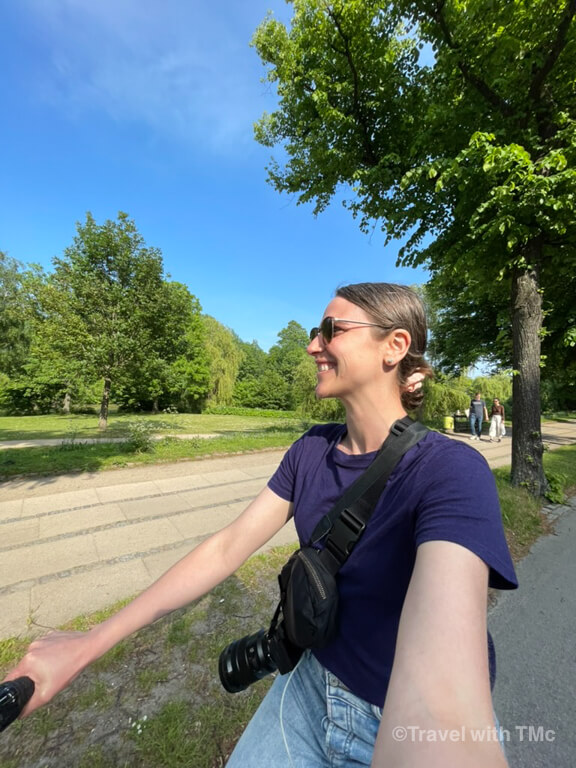
The best way to save money on transportation anywhere you are, is to take the heel-toe express. The next best 2 options, especially in Copenhagen, are to bike or take public transit. I’m all for experiencing local culture as much as possible, so that means renting a bike! I’ve never been anywhere with such excellent cycling infrastructure. (No surprise, given the city’s reputation.) The terrain is flat, save for the bridges. Surfaces are smoothly paved, separate from vehicle traffic, and well-maintained. I felt safe the whole time, which is more than I can say for biking in a city like Toronto (which is improving, yet still has a long way to go to be bike-friendly).
In the City: Public Transportation
What’s really great about Copenhagen’s public transportation system is that you can use the same ticket for their Metro, s-train, and bus, including the water bus. When purchasing a ticket, you pay based on the number of zones you’ll cross, including the one you start from. The exception is if you’re only using the metro. Even if you travel through each of the 4 zones, you’ll only have to pay for 3! You can purchase Period (re: timed) tickets or Single-Ride Tickets from DOT’s website, their app (available for iOS and Android), or at train station or airport kiosks.

Copenhagen’s metro is an excellent option for zipping around town. There are 4 metro lines which run 24/7. M3 is the newest line and is also known as “Cityringen” or “The City Circle Line”. As mentioned above, it connects several neighbourhoods, such as Vesterbro and Frederiksberg.
It’s important to note that there aren’t “departure times”. Instead the schedule works on “interval times”, or the period between available trains. They’re trying to reduce the time down to 90 seconds. The schedule is fast and frequent, with roughly 2-4 minutes between rush hour trains and 3-6 minutes at all other times throughout the day. Late on Fridays and Saturdays after 1am, the wait between the weekend metro is 7-15 minutes. After midnight from Sunday to Thursday, the time stretches to 20 minutes.
There are a variety of public transportation ticket options in Copenhagen: single trip, 24-hour, City Passes, and the Copenhagen Card. I’ve laid out the different ticket options for you to find the most affordable option for your travel plans below.
Single Trip
A single ticket is great if you’re planning to walk quite a bit in an area. Tickets are timed and useful for public transportation in Copenhagen and Zealand. Double check the time that your ticket is valid for on the printed ticket itself or within the app as they vary. If you’re travelling with a family, 16 years old and up are considered adults and 2 kids under 12 years old may travel for free with an accompanying adult who has purchased a ticket. Service dogs don’t require a ticket.
24-Hour
24-Hour tickets are for those days when you’re trying to see as much as possible in a short period of time. It provides acces to Zones 1-99 on the bus, metro, and train. Purchase tickets through the DOT app, 7-Eleven, DSB train tations, or a DSB Salg and Service.
City Pass
The City Pass comes in 3 different variations to suit your needs: the City Pass Small, the City Pass Large, and the City Pass Extra Large. With unlimited movement on trains, buses, the metro, and harbour buses in Zones 1-4, including airport transportation, the Small Pass is a good choice if you’re staying within the city centre. If you’re hoping to see more of the city, the Large Pass provides unlimited travel throughout Zones 1-99 (City Centre, Capital Region, Zealand, and islands). Both the Small and Large passes are available for 24, 48, 72, 96, and 120 hours. Last, the Extra Large Pass is only available for 24 hours for the West and South. Purchase tickets online or at the train station or airport.
Copenhagen Card (Transportation + Attractions)
This card is a win-win option for travellers. There are 2 versions of the Copenhagen Card: Discover and Hop. Buckle up, because there is a long list of perks that it provides. To start, the Hop Card allows you to access Hop-On Hop-Off buses and free access to 40 city centre attractions. Next up is the Discover card, which provides unlimited public transportation options throughout Zones 1-99, plus 2 kids (under 12) can travel for free, AND you get free entrance to more than 80 attractions. WOWEE! Prices for each of these cards varies depending on the pass time length and the age of the card holder.
Pro Tip: The Copenhagen Card is the ultimate way to save money on public transportation AND attractions!
Leaving the City: Danish Trains
Looking to explore outside of Copenhagen? Travel by train. Similar to public transportation within the city, each adult ticket covers the price for 2 kids under 12 years old as well. Unlike public transportation, tickets for kids that are between the ages of 12 and 15 years old are 50% off! S-Trains can be added to the first or last part of a train trip on Orange Tickets. To save even more money, book your DSB Orange Tickets at least 2 months in before the date of departure. All tickets can be purchased on the DSB website.
Attractions and Activities:
In addition to discounted tickets and deals like the Copenhagen Card, there are also numerous free attractions and activities to enjoy in Copenhagen! The possibilities to explore Copenhagen without spending a cent are endless. Here are several free Copenhagen trip ideas to put on your list:
- Join the locals for an ocean swim in the city centre
- Stroll down Strøget, the pedestrian shopping street
- Explore the city on a Sandeman’s Walking Tour (please tip the guide!)
- Meet the Little Mermaid and enjoy the coastal air

- People watch in the popular Nyhavn neighbourhood (follow the locals and purchase food from a grocery store to enjoy along the harbour)
- Take a picture in front of Hans Christian Andersen’s former home in Nyhavn (door #20)
- Leisurely walk through Kastellet’s star-shaped fortress grounds
- Savour the floral aromas at the Botanical Gardens

- Brush up on Danish history with a free tour at Christiansborg Palace
- Marvel at the magnificent panoramic vistas from the city’s highest viewpoint, the Christiansborg Tårnet (tower)
- Appreciate beautiful Danish sculptures at Thorvaldsens Museum (last Wednesday of each month)
- Peruse the weekend vintage markets in front of the Torvehallerne Market

- Get lost in the stacks at the epic Royal Library (also known as the Black Diamond for its stunning architecture, this historic library holds every single book printed in Danish)
- Visit the Museum of Copenhagen (free entry on Wednesdays)
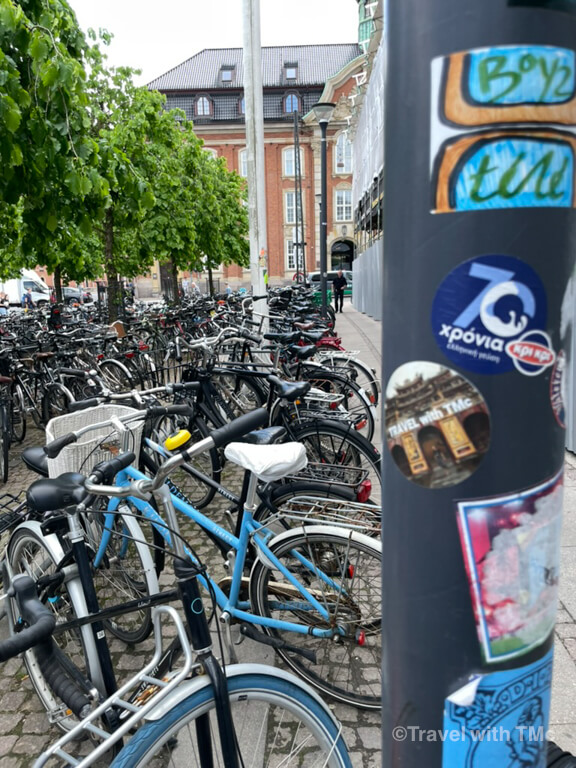
- Go on a treasure hunt to find the Travel with TMc stickers dotted around the city
- Picnic in the park
- Find the 6 giant Thomas Dambo Trolls
- Wander through the fascinating bohemian Freetown Christiania

In Conclusion: Is Copenhagen Expensive?
So, is Copenhagen expensive to visit? It’s definitely not a budget destination. With that being said, you can see and do quite a bit without spending too much money. It’s up to you to manage how you want to experience a place with what your pocket will allow. Creativity goes a long way in making a memorable trip and where there’s a will, there’s a way!
I’m curious to know – what are some budget-friendly ways you’ve explored Copenhagen? Feel free to leave them in the comments below.
BONUS Downloadable Map
Want to make your trip planning even simpler? Check out this 3-Day Copenhagen Itinerary and add this bonus downloadable map to your phone!
Sneak Peek of Your Copenhagen Trip
Have a sneak peek here of some of the fun you’ll have in Copenhagen! Still have questions about travelling to Copenhagen? Send me a DM on Instagram or through my website contact page and I’ll be happy to help where possible.

Subscribe and Stay in the Loop!
Stay tuned to all things vanlife, international travel, and learning how to pay yourself to travel like I do by subscribing to the (nearly) monthly newsletter and joining the adventure on Instagram. Thanks for reading!
Helpful Tips for Booking Your Trips
Flights
If you want affordable flights, you must get into the points and miles game. Check out my Travel Coaching services to help Canadians fly for less than a tank of gas!
Car Rentals
To help you explore new destinations, turn to Discover Cars for a huge range of vehicle options and excellent prices.
Accommodation
There are so many options for affordable, comfortable, and unique accommodation. Some of my favourite accommodation options are housesitting and hostels. I’ve been using Trusted Housesitters and Hostelworld for years. If you prefer hotels, then check out Booking.com.
Activities
Get Your Guide is a fantastic resource for different activities to try when travelling. They have everything from walking tours, food tours, tickets to attractions, and multi-day trips, and more. Check out this super cool view I had of Helsinki when I was in Finland for the Christmas markets. My favourite GYG tour so far was the fantastic walking food tour I did in Dublin. That experience had a wild twist, but you’ll have to read this blog post to find out why!


