
On Lake Atitlán’s southwestern shore rises the majestic Volcán San Pedro. A sacred site for the local Tzutujil Mayan peoples and a popular hike with visiting travellers, its beauty is matched by the effort required to ascend its rocky peak. Planning your hike up a volcano can be intimidating, so I’ve put together a pretty thorough guide to hiking Volcán San Pedro to help with your preparation. This blog post will answer questions like “Where is Volcán San Pedro?”, “When is the best time to hike Volcán San Pedro?”, “What should I pack to hike a volcano?” and more.
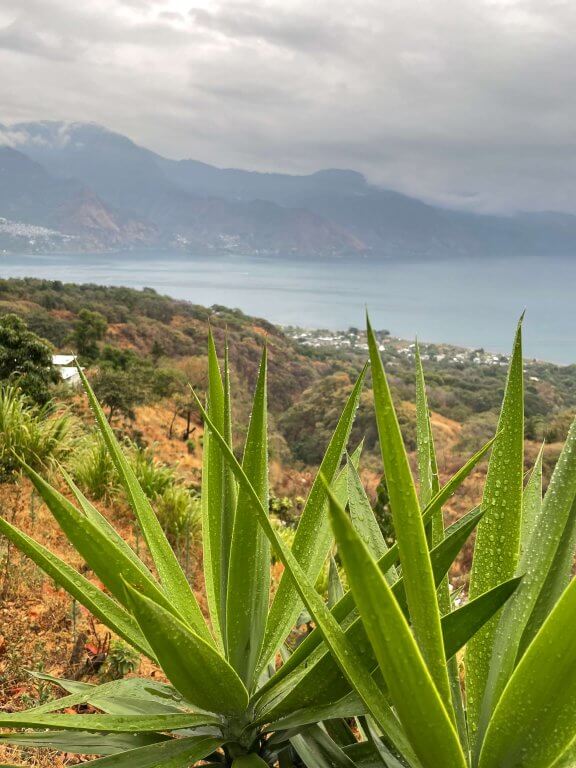
The most popular of the 3 volcanoes to hike on Lake Atitlán is challenging and not suitable for all fitness levels. Going with a guide is certainly helpful, as is doing the necessary research in advance. I’ve put together a ton of information for you here and will share my personal experience at the very end. Happy reading, fellow adventurer!
✅ TLDR: Short on time? Here are my top finds for your Lake Atitlán trip!
🛎️ Find awesome Lake Atitlán accommodation
🚙 Rent a car
🎟️ Book the best tours
🥦 Secure travel insurance
🛍️ Shop my favourite travel products
🌟 Follow Travel with TMc on IG
Disclaimer: This post includes affiliate links. At no extra cost to you, these links provide a small commission to allow this website to continue building helpful and interesting content. Thank you for supporting Travel with TMc, whether through sharing the content you enjoy or using the affiliate links. It is much appreciated!
Why Hike Volcán San Pedro?
Everyone’s “why” for hiking Volcán San Pedro will be different, but here are a few reasons to inspire your next outdoor adventure:
- Potential for Views: I say potential because, spoiler, there were none on the day I summited!
- Shorter Time: Compared to other volcanoes you may hike in Guatemala, this is Lake Atitlan’s smallest.
- Moderate Difficulty: With decent cardio and well-oiled hip flexors, you’ll be able to hike. If you’re less active, it’s going to be a tough go. I read somewhere that Volcán San Pedro is good for beginners, though I’m curious what is considered a “beginner” given that AllTrails listed it as difficult.
- Time in Nature: Need I say more? Birders will especially love this hike. The turkey-sized horned guan (Latin: Oreophasis derbianus; Spanish: Pavo de Cacho) is reminiscent of the Pleistocene era and can be spotted in the cloud forests. Talk about a blast from the past!
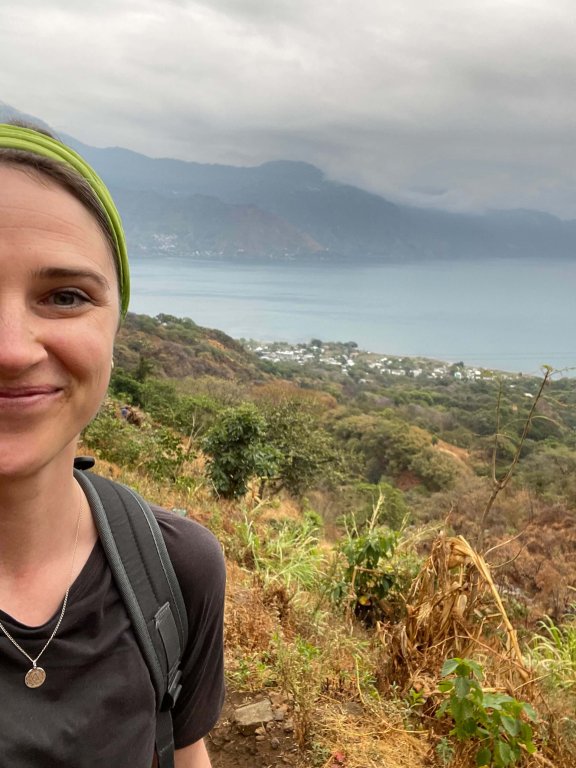
Why did I hike Volcán San Pedro? There were a few reasons. First, our plans to hike Acatenango fell through since an eruption led to evacuations right before we left for Guatemala. Second, the friends I was travelling with were keen on giving the popular Lake Atitlán activity a go. Third, I was curious to test my fitness level. More on how that worked out below.
How Safe is it to Hike Volcán San Pedro?
There are a few safety categories to address here. First, you’re climbing a volcano. Volcán San Pedro is a stratovolcano, also known as a composite volcano, which means that it’s tall and cone-shaped. Luckily, the eruption risk for Volcán San Pedro is near zero. It hasn’t erupted in over 10,000 years and is dormant.
The second safety category to address is human interactions. Prior to 2023 there were reports of robberies. During our hike we saw officers on the lower part of the trail and at rest stops. It appears their presence has curtailed the previous issue. I felt safe the whole time and didn’t hear mention of robberies from anyone in our group or during our time in Lake Atitlán.
The third safety consideration with hiking is your physical ability to undertake said activity. Only you know where your capacity lies – sometimes it’s worthwhile to test your limits and sometimes it’s better to enjoy the view from afar. Also, consider altitude sickness and make sure to arrive on the lake a few days before your hike to acclimatize.
To concisely answer the question “how safe is it to hike Volcano San Pedro?”, it’s pretty safe. That being said, check with the locals beforehand. It also helps to read the most up-to-date Google reviews from the trailhead and summit, as well as AllTrails’ reviews.
When is the Best Time to Hike Volcán San Pedro?
There are different factors like your budget, tolerance for crowds, preferred weather, and time off work, that determine the “best time” of year to hike San Pedro. The dry season makes the trail much easier to climb and the reduction in rainfall increases your chance of a clear view at the top.
Guatemala’s dry season runs from November through April. It’s the best time for outdoor activities (like hiking!), sightseeing, and photography. It’s also the priciest and most tourist-filled, especially around holidays like Easter and Christmas. Rainy season goes from May to October and, compared to the coast, is mild in Lake Atitlán.
The best time of day to hike Volcán San Pedro is in the early morning. By starting earlier you’ll hopefully avoid the late morning clouds. It’s an excellent sunrise hike, not only for the views, but to avoid the heat and to increase the likelihood of seeing others on the trail.
How Long is the Volcán San Pedro Hike?
The Volcán San Pedro hike is 8 km out and back. Depending on your fitness level, the weather, group speed, starting point (trailhead or in town), and busyness of the trail, it can take approximately 5-6 hours.
How Difficult is the San Pedro Volcano Hike?
The Volcán San Pedro hike is pretty challenging. For the non-morning folk out there like myself, the 6am group meet-up time was a reach. But, like sports practices back in the day, once you get moving in the fresh air with a group of good people, the tiredness transforms into excitement. In addition to the early morning workout, there are several factors to take into consideration when assessing its difficulty, each of which I’ll break down below.
Altitude
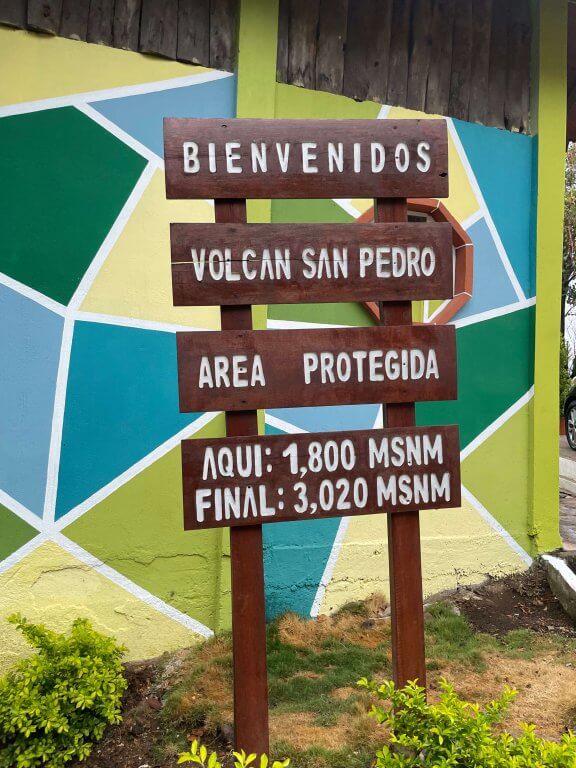
The altitude of Volcán San Pedro is 3,020 metres or 9,908 feet. For reference, that’s roughly 3 kilometres tall or half as tall as Kilimanjaro.
Altitude sickness is a possibility. If you can, spend a few days in Lake Atitlán beforehand to acclimatize. Symptoms of altitude sickness can include headaches, dizziness, dehydration, shortness of breath or heavy breathing, loss of appetite, nausea, and vomiting. Sounds pleasant, no? Anyone can experience symptoms and they vary greatly from person to person. Pay attention to your body and heed its signals.
Elevation Gain
Elevation is the distance between the trailhead and the end point, or the height you will climb. The elevation gain of Volcán San Pedro is 1,162 metres or 3,815 feet.
One of the ways to determine a hike’s difficulty is by how steep it is. To calculate this for round-trip hikes, divide the distance by 2 (because you’re going up one way and down the other) and then divide that number by the elevation gain. Loop trails are assessed differently. Here’s the calculation for Volcán San Pedro:
- 8 kilometres divided by 2 = 4 kilometres
- Divide 1,162 metres of elevation gain by 4 kilometres = 290.5 metres gain per kilometre
For the Americans reading this, the Imperial system breakdown is:
- 5 miles / 2 = 2.5 miles
- 3,815 feet / 2.5 miles = 1,526 feet gain per mile
The general rule of thumb for difficulty categories, based on relatively even elevation gain, go as follows:
- 61 metres (200 feet) to 122 metres (400 feet) / 1.61 km (1 mile) = EASY
- 122 metres or 400 feet to 213 metres (700 feet) / 1.61 km (1 mile) = MODERATE
- 213 metres (700 feet) to 1,000 feet / 1.61 km (1 mile) = DIFFICULT
- 308 metres (1,000+ feet) / 1.61 km (1 mile) = CHALLENGING
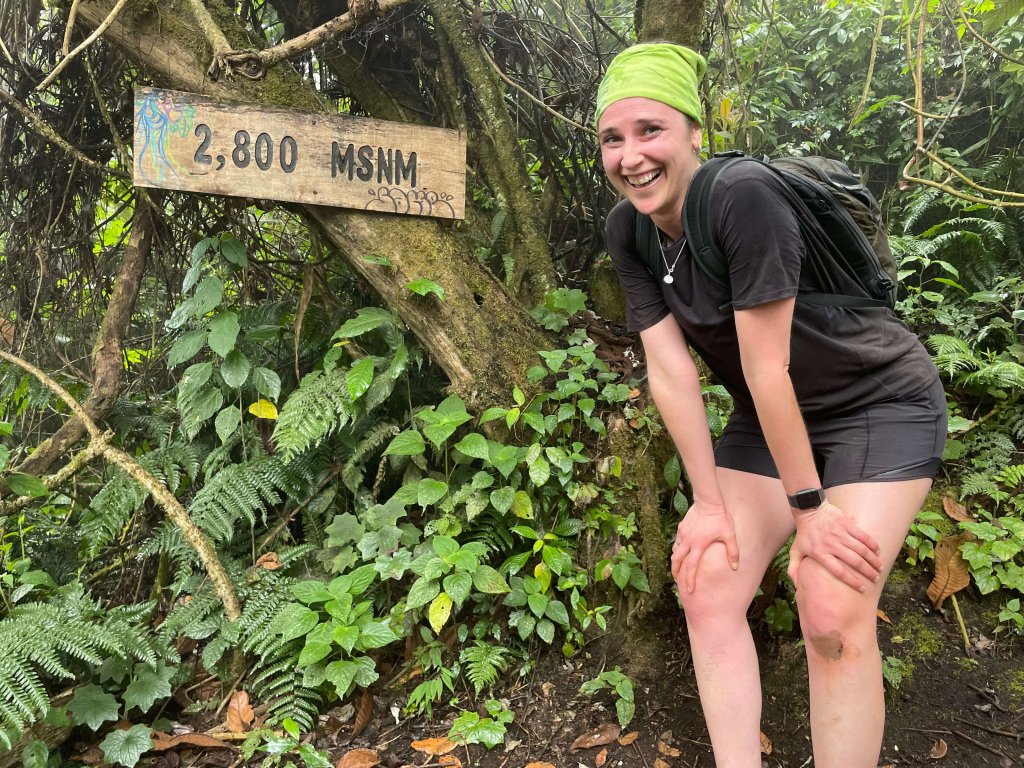
Translation for newbie hikers, regardless of measuring system: the Volcán San Pedro hike is difficult! Thanks to the cone-shape of the volcano, the ascent is fast and steep. The switchbacks, which start around 2,600 m (8,530 ft), help ease things a little since you aren’t going straight up. That being said, it’s still a trek. On the way back down, help your knees out by doing a mix of baby-step jogging and walking. Be careful if it’s slippery – I definitely wiped out at one point!
Climate & Temperature
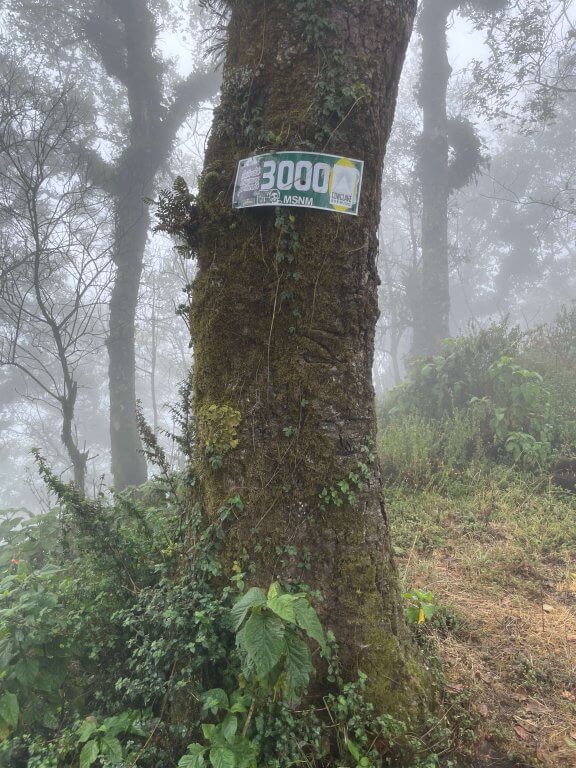
It absolutely poured the night before our April hike, making for wetter trails. Luckily this meant the portion in the fields wasn’t too heat intense. Once under the shade of the trees, the temperature dropped and the air became misty. If you’re bringing anything in your backpack that you don’t want to get destroyed, wear a backpack cover and pack things like camera equipment in a waterproof bag.
Layers will come in quite handy. The variety of landscapes – fields of corn, trails lined by coffee and avocado plants, lush forest, and a rocky peak above the clouds – mean that you will experience a variety of temperatures throughout the hike. The majority of the hike is in the forest. Under the tree cover and at the summit are both quite cool, so wear or at least pack layers.
Trail Conditions
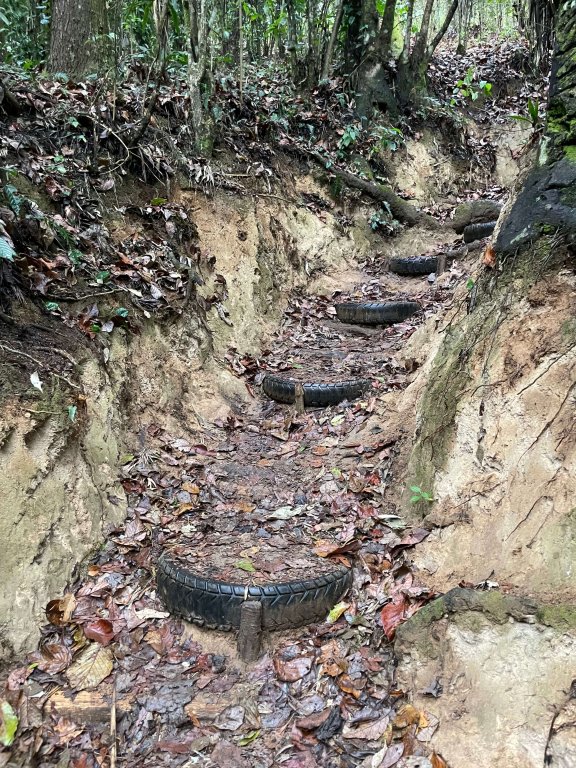
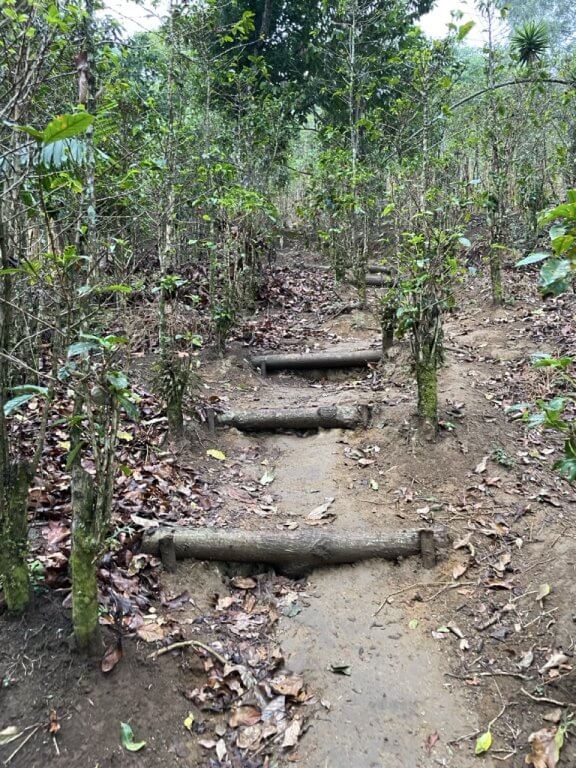
The night before we hiked, it poured – and not the dainty raindrops peppering the roof kind of rain. It was a proper downfall for what seemed to be the whole night. This, of course, made for wetter trail conditions. Surprisingly, the trail was less slippery than anticipated, though the descent was a little slick.
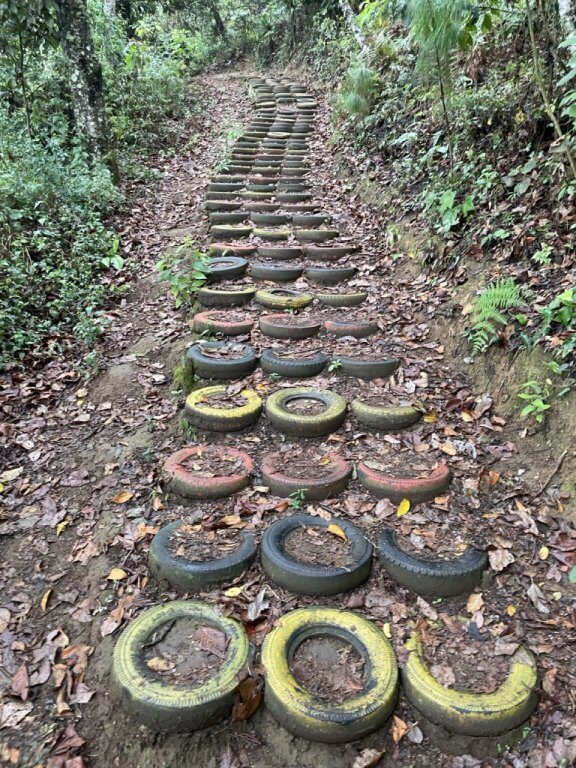
In general, the dirt trail is well-maintained and there are plenty of signs to keep you on the right path. A variety of stepping aids, like wooden logs and tires help a lot, especially on wetter days. Be careful at the summit with the wind and lack of guardrails.
What to Pack and Wear for Hiking Volcán San Pedro
- Sunglasses
- Layers (long-sleeve shirt or rain jacket)
- Pants (minimize bug bites)
- Sunscreen
- Hat
- Mosquito repellant
- Water
- Snacks
- Headlamp
- Camera and/or Phone
- Buff (not necessary, though may be preferred on dusty days)
- Poles or Walking Stick (personal preference but may be nice for the descent)
- Minimal Cash (Q100 entry fee, tips, transportation)
Do You Need a Guide to Hike Volcán San Pedro?
It is not required to hike with a guide for Volcán San Pedro. That being said, the park’s entrance fee of Q100 ($18 CAD) per person includes a guide.
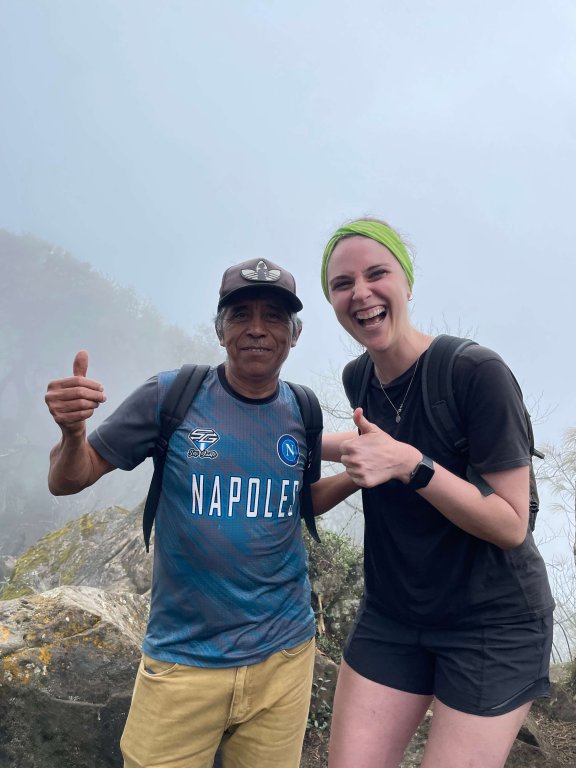
My friends and I chose to sign up for a guided group hike. As an inexperienced hiker, I really enjoyed having a local guide. Our patient and friendly 60-year-old leader, Salvador, has been climbing the volcano for decades. That kind of knowledge is invaluable! I asked questions (in Spanish) about the flora and fauna of Volcán San Pedro. The distraction helped and added to the enjoyment of the activity.
Do You Need Special Insurance to Hike a Volcano?
As with any trip, buying travel insurance is a must. This is especially true if you’re participating in activities like hiking, surfing, paragliding, etc… Double check that your credit card insurance or travel insurance broker also offers coverage for these types of activities.
Trail Head & Rest Stops on Volcán San Pedro
First things first, make sure to use the washrooms at the trailhead before you head on your hike. Gentlemen, we know you can go anywhere – but no one wants to see that. There is another washroom far up the trail. I didn’t use it so I can’t speak to its upkeep. As with any hike, come prepared with your own TP and hand sanitizer.
There are a few rest stops along the hike for Volcán San Pedro:
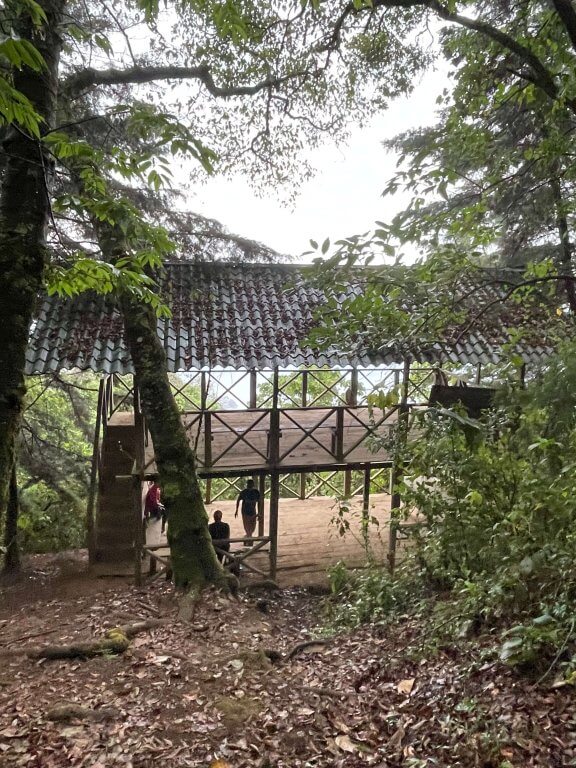
- 1st stop: a 2-story platform at 2,170 metres with a mirador (viewpoint) of the lake, benches to rest on, and a bathroom*
*At 2,500 metres you’ll see police offers stationed
*There is also a cool swing after this stop. - 2nd stop: a shelter, campsite with benches around a campfire, and a toilet at 2,800 metres (people who tent overnight would stay in this area)
- 3rd stop: the summit! (rocky with big boulders and precarious wooden stairs)
Simple Tips for Hiking Volcán San Pedro
- Start Early
- Stay Hydrated
- Bring / Wear Layers
- Walking Sticks for the Descent
- Pack Snacks
- Hire a Guide
- Rest When Needed
- Celebrate with a Big Meal and Relaxation!
What Kinds of Accommodation to Book when Hiking in Lake Atitlán
I wrote an entire blog post on where to stay in Lake Atitlán. It provides information on each of the towns around the lake, plus a variety of accommodation options ranging from budget hostels and homestays to unique boutique accommodation. If you’re looking for “luxury” in the sense of a massive hotel chain, you won’t find it here. That being said, trust that you will find many memorable, comfortable, and welcoming accommodation in Lake Atitlán.
Check Out These Nearby Hikes
Final Thoughts and My Experience Hiking Volcán San Pedro
This is the 2nd time in 10 years that I’ve climbed a volcano and I’ve got to say, it was a lot better this time around! Both times I went in blind, having done minimal research or advance training. Whether I’d suggest that “preparation” or not is neither here nor there. Some things to keep in mind: I hiked with a guided group each time, I’m in alright shape for someone who spends a lot of time on a computer, and sometimes having no expectations makes things easier.
The beginning of the trek is fairly laidback. Beginning in farmers’ corn fields and under an open sky, you’ll quickly arrive at a path lined with coffee and avocado trees.
Pace yourself.
Once you start to climb, it gets steep quite quickly. I was very thankful for all of the yoga classes, mixed in with some Pilates and the odd run I’ve put in over the past few years. That being said, the endless hours I spend sitting for work definitely showed through; my hip flexors were screaming. Luckily, I didn’t experience the knee pain that many others did on the descent. The other physical difficulty I encountered was breathing, which has always been a tough spot for me. The altitude didn’t help, but like the tortoise (I was the last in the group), I made it to the finish line!
The summit was comedically anticlimactic. Thanks to heavy fog, the “view” was non-existant. I had read that on clear days you can see to the Pacific Ocean (can anyone confirm this?), but no such luck. Despite the slight let down, I was pretty thrilled with the day’s experience.
Whether you’re a less-experienced hiker like myself or someone who lives for outdoor adventures, I definitely recommend you try the Volcán San Pedro hike.
Guatemala Travel Guide BONUS Downloadable Map
Want to make your trip planning even simpler? Check out this bonus Guatemala Travel Guide downloadable map!
Sneak Peek of Your First Trip to Guatemala
Curious to preview your itinerary? Have a sneak peek here! Still have questions about planning your first trip to Guatemala? Send me a DM on Instagram or through my website contact page and I’ll be happy to help where possible.
Subscribe and Stay in the Loop!
Stay tuned to all things vanlife, international travel, and learning how to pay yourself to travel like I do by subscribing to the (nearly) monthly newsletter and joining the adventure on Instagram. Thanks for reading!
Helpful Tips for Booking Your Trips
Flights
If you want affordable flights, you must get into the points and miles game. Check out my Points and Miles Travel Coaching services to help Canadians fly for less than a tank of gas!
Car Rentals
To help you explore new destinations, turn to Discover Cars for a huge range of vehicle options and excellent prices.
Accommodation
There are so many options for affordable, comfortable, and unique accommodation. Some of my favourite accommodation options are housesitting and hostels. I’ve been using Trusted Housesitters and Hostelworld for years. If you prefer hotels, then check out Booking.com.
Activities
Get Your Guide is a fantastic resource for different activities to try when travelling. They have everything from walking tours, food tours, tickets to attractions, and multi-day trips, and more. Check out this super cool view I had of Tallinn when I was in Estonia for the Christmas markets in 2023, all because of a Get Your Guide experience. My favourite tour so far that I’ve been on with Get Your Guide is a fantastic walking food tour I did in Dublin. That experience had a wild twist, but you’ll have to read this blog post to find out why!


