Starting anything can feel daunting, let alone a full out podcast production. If you’re anything like me, you might have an idea that you’re really excited about and then sit on it for, well, too long. Especially when it comes to a full-out production – how to start a podcast in 2026 can seem overwhelming! Maybe it’s because I’m a Gemini, but I’m either really impulsive (luckily this has worked out in the past!) or I get stuck in analysis paralysis before finally getting started.
Don’t be like me. Just do it.
I know, I know. Easier said than done, but actually it’s easier to do than to not. How’s that for something to chew on!
Really though, whether you choose baby steps or to canon ball in, just start. That’s the most important step in this whole article.
Why Start a Podcast?
Right off the bat there are 3 main reasons that come to mind when I think of why you should start a podcast. The first reason is, why not? Why not add a cool new project to your life? Why not give something a go that you’re unsure about? What have you got to lose by trying?
The second reason should definitely start a podcast is because you’ll learn many new skills: planning, interviewing, technical and gear skill, editing, marketing, listening, the list goes on and on. You can learn as much or as little as you like. It’s a choose-your-own-adventure bonanza!
The third reason is because having new hobbies or revenue streams is a great way to enhance your life. As adults we sometimes get stuck in this cyclical rut of only going to work and taking care of life’s responsibilities. We might stop playing on sports teams or participating in musical groups or no longer colour for the fun of it because these are not “practical” activities. On the contrary, I would argue that having hobbies makes you a more well-rounded, happier, healthier, and interesting individual. If you’re looking at making the podcast an income-earning venture, then that’s a bonus.
Is it Difficult to Start a Podcast?
I’ll start with everyone’s favourite answer: It depends.
Starting a podcast can be as easy as recording yourself speaking into your phone – no guests, no video, no fancy gear, and no planning. Starting a podcast can also entail a ton of research, creating guests guides, building a physical studio, buying and learning how to use cameras, microphones, and lights, diving into social media and newsletter marketing, and on and on.
Basically, you decide the level of difficulty based on the scope of the project you have in mind.
For me, I knew that I wanted to interview guests, so that meant I needed to create a list of people to reach out to, as well as format an invitation, intake form, and guest guide. It also means coordinating international schedules and troubleshooting through international tech glitches. I knew that my podcast would be recorded with both video and audio so that I could put it up on YouTube (and hit another goal of mine) and create promotional videos for social media. Since this is for my business, Travel with TMc, I added a whack ton more work onto my plate with the marketing and promotion of the podcast. Long story short, starting my podcast has been complex – but I chose that route. I’ve loved every step of the process and am looking forward to even more learning, upgrading, and exploring with it in the future!

How to Start a Podcast in 2026 (or any year, really)
I started formulating the idea for my travel podcast years before I started recording. Please don’t do that. Think less and do more.
Assuming this is a hobby project, as so many podcasts are, brainstorm ideas, test them out with your potential audience (aka see what friends, family, colleagues, and strangers at the coffee shop think), and then put it into action. Your idea doesn’t have to be earth shatteringly amazing or something totally unique (all ideas are recycled). It has to be something you’re passionate about and presumably knowledgable on as well. That’s it!
2: Make these 5 Decisions
- What is the objective of the podcast?
- Who is it for?
- Who are the hosts?
- Will there be guests?
- What format is it: audio-only or audio plus video?
Okay let’s walk through each of these initial questions to answer.
First, what is the point of your podcast? Do you want to entertain or inform people, or both? Do you want to highlight other people’s experience and expertise or do you want to share your perspective? With Travelling Through Life: A Podcast on the Go, I wanted to highlight the many different ways that people travel throughout their life (and how that can change for an individual over their lifetime) so that people can see and hear themselves reflected in the greater travel narrative (and not just the narrowly prescribed social media lens). I also wanted to inspire people to travel in new ways or to new places by the other guests that differ from their own travel styles. And last, selfishly, I really wanted to chat with my guests!
Second, who is your audience? What are their interests and when will they be listening to or watching your podcast? For example, my audience spans a wide age demographic (20s to retirees), is English-speaking, and loves to travel. My podcasts are 1 to 1.5 hours long so my audience is either listening while they have the time (ie. driving, cooking, cleaning, in transit while travelling, on a walk, etc…) or are listening to the episodes in chunks, which is something I often do with longer-form content.
Third, decide on who the host will be. Is it just yourself or are there co-hosts. Personally, I love podcasts that have great banter. There are some shows I listen to with a sole host, but they are far outnumbered by the ones with 2 or more people talking. You may decide this based on your own personal preference or the show’s format and objective may dictate the direction.
Fourth, and somewhat shared with the third question, is choosing whether your show will have guests. Again, the objective of the podcast may lean you towards inviting guests on your show. I knew from the start that my show would have guests because A) I didn’t want the show to be about me and my travels, B) the objective of the show was to share a variety of experiences and perspectives, and C) as a listener, I enjoy podcasts much better when there are 2 or more participants.
The 5th big decision is whether your podcast is going to be audio-only or have a video component as well. A few things will help you make this decision: how simple do you want the set-up, production, and editing to be, which platforms will you be distributing your podcast on (you can still put audio-only podcasts on YouTube, by the way), what kind of experience do you want your audience to have, and how do you want to market your podcast. Answering these questions will get you closer to deciding if you’re going to incorporate a video component or not. I knew that my podcast would have video because similar to a TV interview, I like seeing people’s faces when they interact, if I’m in the space and have the time to watch the podcast. Perhaps the more obvious answer to this for Travelling Through Life: A Podcast on the Go is that diversified representation is the main goal of my podcast and so the visual component is necessary. I want people to see that you don’t have to look a certain way or physically be a certain thing in order to travel. A big way to do that is to include visuals.
3: Choose Your Software
When I was researching which gear and software I would need to put my plan into action, there was a fair amount of options to sift through. Ultimately I chose Riverside and Buzzsprout for the software, I stuck with the camera on my computer, and bought mics to enhance the audio.
Riverside is a software that allows you to both record and edit within one platform, which is the main reason I chose it. I wanted to simplify my learning curve for both ends of the production and this appeared to be the best way to get there. I actually came across Riverside for the first time when my friend Calvin invited me as a guest on Cubicles to Passports. As a guest, all I had to do was click a link to enter the chat. There was no downloading, no codes, nothing other than a simple click. Knowing that my podcast would be guest-centric, this was another attractive feature. I’m entering my second year using Riverside and so far it’s great. Sign-Up here for Riverside.
4: Record
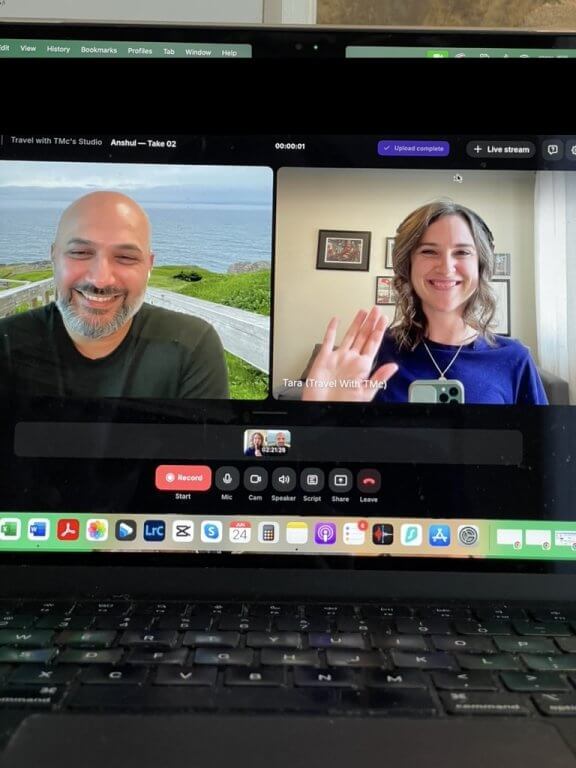
Recording your podcast is, in my opinion, the most fun part of the whole process. Bring your ideas to life with the interesting conversations or narratives that you’ve been dreaming of sharing. Simply press record and go.
5: Release it Into the World
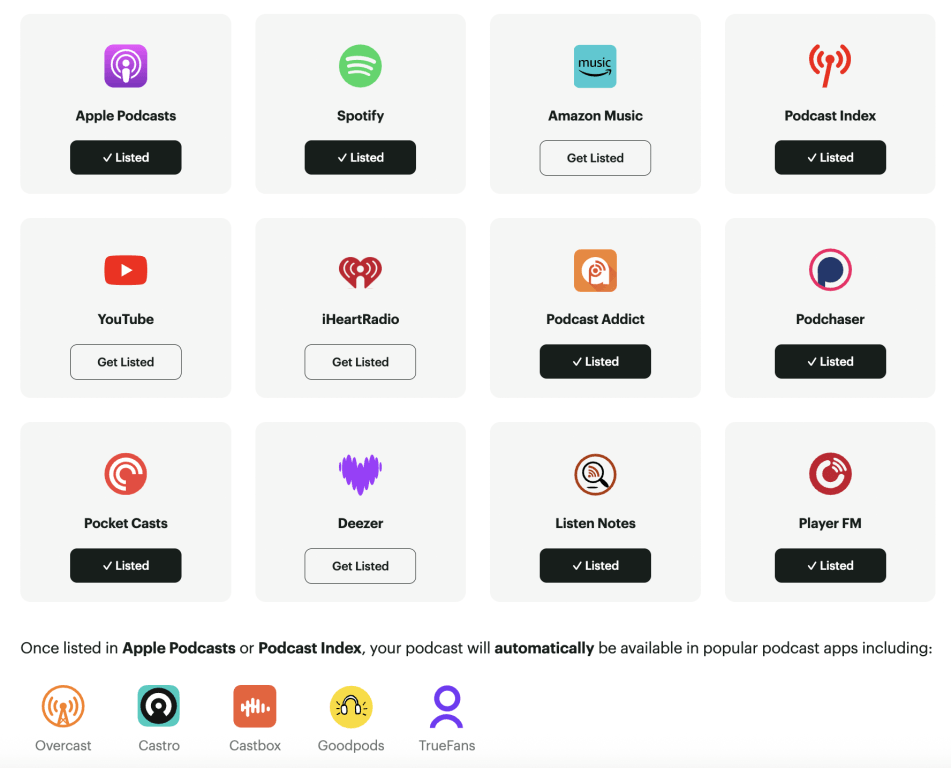
After you’ve record and edited your podcast, there’s one more major step: uploading it to players for people to listen. Technically you can manually upload to each podcast player individually, but that would take a ton of time. Instead, check out hosting options and software that will upload to several podcast players for you. Buzzsprout is a well-known option that hosts and uploads your podcast to tons of different channels, including YouTube Podcasts. Check out the image below to see all of the players it connects with. It’s been super easy to use, with a whole bunch of neat features like your own official podcast homepage, transcriptions, email updates with your weekly stats, and even a little section at the bottom with personal podcast suggestions for your audience. Use this link for $20 off your Buzzsprout membership.
6: Promote Your Podcast
You’ve put in all the hard work of planning, recording, editing, and releasing your podcast into the wild. Now it’s time to let people know to go listen. There are several ongoing ways to promote your podcast: word of mouth with friends/family/community members, your social media platform(s) of choice, a newsletter, or a website. Another excellent 1-off way to help promote your podcast is by being a guest on other podcasts.
7: Keep Going!
You did it! Alright, now’s the time to rinse and repeat. Analyze what went well the first go around, systemize your process to make it more efficient, and just keep going one step at a time.
Bonus Tip:
You’ve probably heard this before, but it’s true. It doesn’t matter what equipment you use or if your audio production isn’t the best. If the story and conversation are captivating and the passion is evident and you stay consistent, listeners will find your show. They will tell other people to listen and watch and that is how things grow. Don’t let a lack of technical knowledge hold you back. That’s the cherry on top. The substance is you, your idea, and your determination to see the vision come to life.
Have You Ever Wanted to Start a Podcast?
Have you ever wanted to start a podcast? I’d love to hear your podcast ideas in the comments below. After reading this blog post, I hope that these tips have given you both tangible and helpful intangible steps to get you started. You can do it!
Subscribe and Stay in the Loop!
Stay tuned to all things vanlife, international travel, and learning how to pay yourself to travel like I do by subscribing to the (nearly) monthly newsletter and joining the adventure on Instagram. Thanks for reading!
Helpful Tips for Booking Your Trips
Flights
If you want affordable flights, you must get into the points and miles game. Check out my Travel Coaching services to help Canadians fly for less than a tank of gas!
Car Rentals
To help you explore new destinations, turn to Discover Cars for a huge range of vehicle options and excellent prices.
Accommodation
There are so many options for affordable, comfortable, and unique accommodation. Some of my favourite accommodation options are housesitting and hostels. I’ve been using Trusted Housesitters and Hostelworld for years. If you prefer hotels, then check out Booking.com.
Activities
Get Your Guide is a fantastic resource for different activities to try when travelling. They have everything from walking tours, food tours, tickets to attractions, and multi-day trips, and more. Check out this super cool view I had of Tallinn when I was in Estonia for the Christmas markets in 2023, all because of a Get Your Guide experience. My favourite tour so far that I’ve been on with Get Your Guide is a fantastic walking food tour I did in Dublin. That experience had a wild twist, but you’ll have to read this blog post to find out why!


