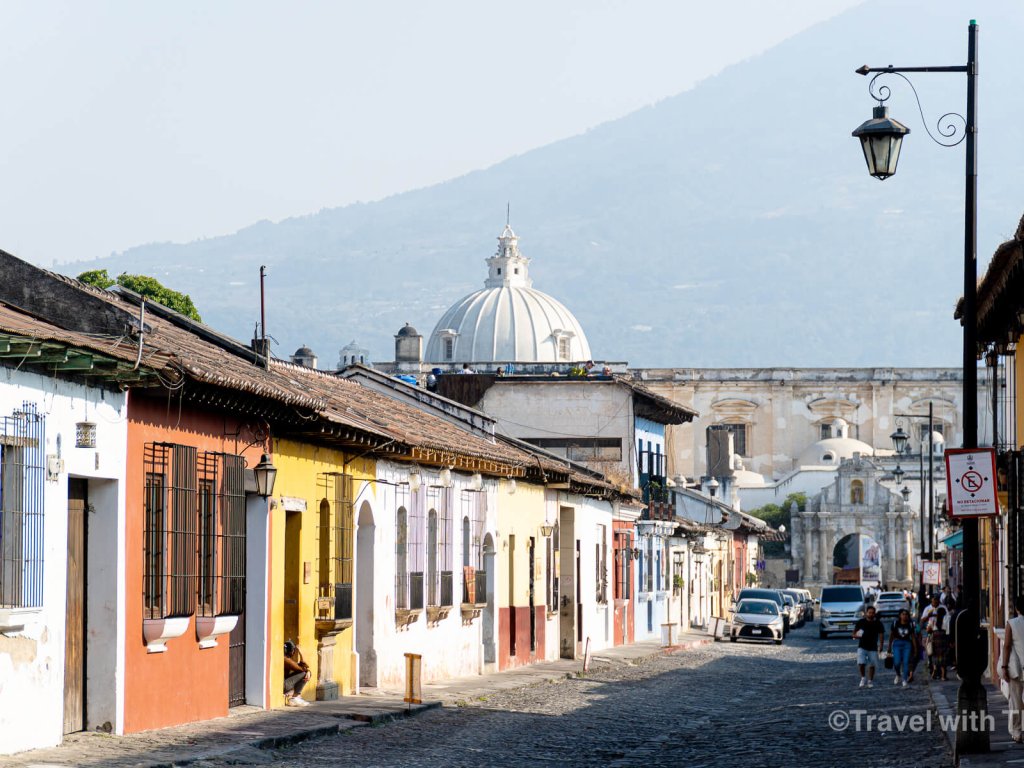
Guatemala, officially known as the Republic of Guatemala, is one of 7 Central American countries. Its enchanting landscapes include active volcanos, black sand beaches, palm trees, lush forests, and more. The land’s human history dates back thousands of years. Guatemalans’ use of colour knows no bounds and the almost 30 languages spoken there are equally vibrant. Guatemala is a place you must see, taste, hear, touch, and feel in-person, firsthand. This Guatemala Travel Guide will give you all the basics you need to help you start planning your trip.
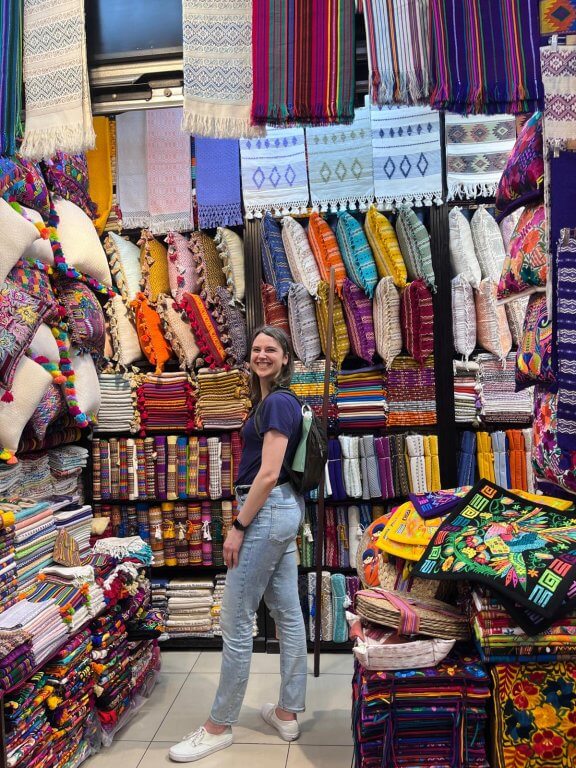
✅ TLDR: Short on time? Here are my top finds for your Guatemala trip!
🛎️ Find awesome Guatemala hotels
🚙 Rent a car
🎟️ Book the best tours
🥦 Secure travel insurance
🛍️ Shop my favourite travel products
🌟 Follow Travel with TMc on IG
Disclaimer: This post includes affiliate links. At no extra cost to you, these links provide a small commission to allow this website to continue building helpful and interesting content. Thank you for supporting Travel with TMc, whether through sharing the content you enjoy or using the affiliate links. It is much appreciated!
Where is Guatemala Located?
Guatemala is located in Central America. It rests between the Pacific Ocean and Caribbean Sea. It shares Mexico’s southern border, is west of Belize, and north of El Salvador and Honduras.
When is the Best Time to Plan Your Visit to Guatemala?
As with anywhere you go, different factors play into what the “best” time of year is to visit a destination. Price, crowds, weather, and when you can take holidays all influence this decision. This Guatemala Travel Guide will give you an idea of the pros and cons to each season to help you make an informed decision for your best time to visit.
Weather
If weather is the key consideration, you’re in luck. Guatemala is known as the “Land of Eternal Spring”. Temperatures range from about 20 degrees Celsius to just over 30 degrees Celsius, depending on altitude and proximity to the ocean. Ideally, it’s best to visit in the dry season which starts after the hurricanes pass and goes from November through to April. If outdoor adventures are the inspiration for your visit, November to March is the time to book. Beware, however, that this will coincide with the highest prices and most tourists, especially in the lead up to Easter.
That being said, the rainy season (May to October) typically sees only a couple hours of rain per day in certain parts of the country. You’ll find a big difference in humidity between somewhere like Antigua, which has perfect spring weather, and El Paredón on the coast, which is a multi-shower a day destination. Unless you’re a storm chaser or addicted to adrenalin, maybe skip the hurricanes which peak from August through October.
Festivals
Guatemala’s numerous festivals are definitely a reason to plan a trip. Here are a few to keep in mind.
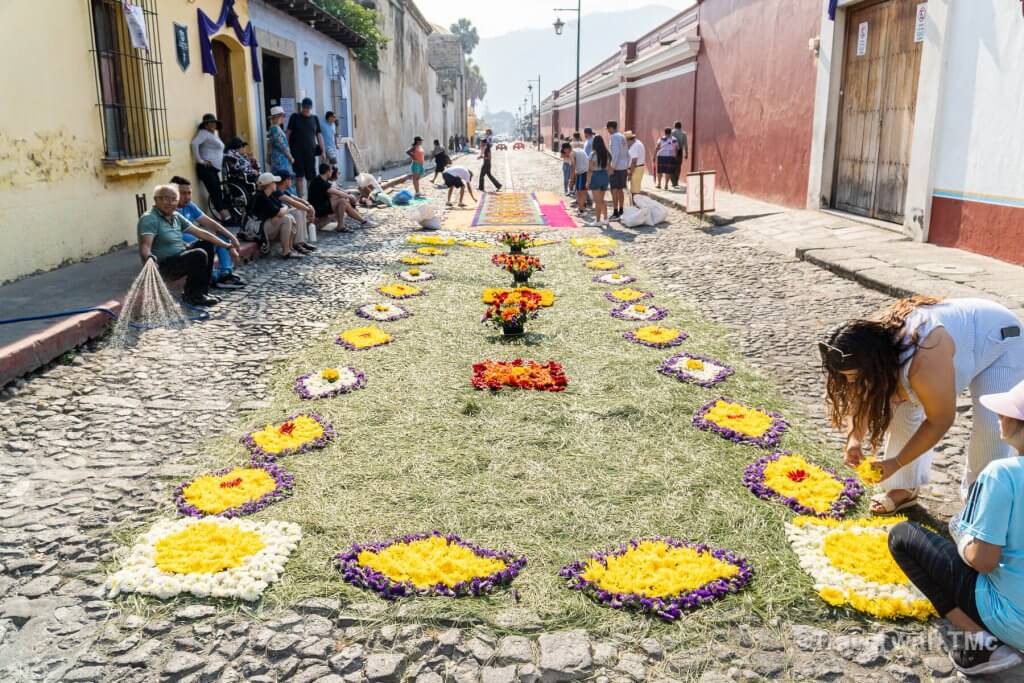
Semana Santa and Easter are two of the most important religious holidays in Guatemala. Depending on the year, they fall in March and April. During Semana Santa (Holy Week) leading up to Easter, the streets of Antigua become carpeted in colourful floral patterns made from sawdust called “alfombras”. Processions take place with huge floats and lots of community participation. Over the Easter weekend, Guatemalans head to the coast to enjoy surf and sun on this special holiday. Make sure to book your accommodations far in advance for Antigua, El Paredón, Lake Atitlán and other popular destinations at this time.
The Day of the Dead (November 1st and 2nd) is a sight to behold in the villages of Santiago and Sumpango near Antigua. This is where you’ll find the stunning Kite Festivals. Guatemalans and travellers make their way to Sumpango for a glimpse of the massive community-made kites, known as “barriletes gigantes”. The Kaqchikel Maya have long given spiritual significance to kites and are the reason the festival exists.
In December there are a few notable festivals to attend. Every December 7th at 6pm, Guatemalans throw items into bonfires to cast away the devil and other evil spirits in the Burning of the Devil celebration. This cleansing makes way for the coming Christmas season. Then, from December 13th to 21st, the Fiesta de Santo Tomás, patron saint of Chichicastenangom (“Chichi”), takes place to pay tribute to the natural world and their ancestors. This religious festival quite unique, given the fact that it is a combination of Catholic and Mayan beliefs. Head to the southwest of Guatemala in the western highlands of El Quiché for the Fiesta de Santo Tomás.
Christmas is a cherished time in Guatemala, a country with deep Catholic roots. And, like many places around the world, New Years is another time of year for celebration.
Getting to Guatemala
Depending on where you’re coming from, there are several airlines that fly to and within Guatemala including (but not limited to) Air Canada, United Airlines, Avianca, WestJet, Iberia, Copa Airlines, and AeroMexico.
For North American departures, one of my favourite websites and tools to use when booking flights is Flight Connections. Typically I use it when booking super affordable flights with points and miles, however it can also be a good resource when researching cash flights. There is both a free and paid version of the website. I use the free version because the aircraft and cabin class aren’t important to me. However, if you’re an Av Geek upgrade to glean even more information about available flight routes from your departure city.
Pro Tip: To pay a fraction of flight prices, book your flights using points and miles. Not sure where to begin? You’re in luck! I’ve offer an online course to help Canadians learn how to pay themselves to travel and some beginner points and miles tips on the blog.
Flight Layovers
I don’t know about you, but I love discovering airports’ unique features – and I’m not talking about that lounge life. On my way to Guatemala I had a short layover in the El Salvador International Airport. To date, it’s one of my favourite airports for a quick layover.
Why?
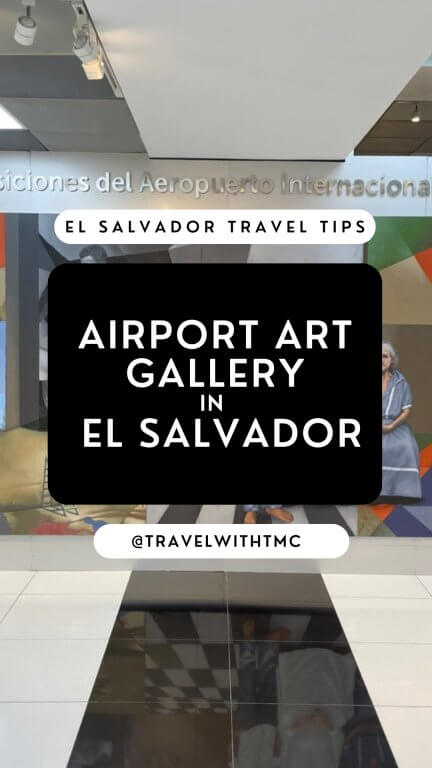
Well, for starters it was the easiest transition I’ve ever had in over a decade of travel to get from gate to gate. So easy in fact, that my departing gate was right beside the arrival gate. Win! What made this airport even cooler was that there was an art gallery another 20 seconds down from said departure gate! I spent my whole layover perusing the beautiful art and learning about the beloved El Salvadorian artist, Fernando Llort.
Is Guatemala Safe?
I felt safe the whole month that I was in Guatemala. As a Caucasian solo female traveller who is 6 feet tall, I am afforded privileges and advantages due to my appearance and stature. (On the opposite end, I stick out like a sore thumb, making it hard for me to blend in.) I also have more than a decade of experience travelling the world which has taught me to be aware of my surroundings and how to act appropriately in different scenarios. This is not to say that I am immune to anything happening, but provides the context and perspective from which I’m writing about safety.
It is advisable to take precautions in various parts of Guatemala and in certain neighbourhoods in Guatemala City. Canadians who are travelling abroad to Guatemala can check the government website for travel advisories prior to and during their trip. Don’t believe everything in the news (the world is not all gloom and doom) and try to talk to people prior to your trip who have lived or travelled through the desired destination. Always heed the safety suggestions of locals. If they’re making changes to their behaviour for safety reasons, so should you.
Antigua was perhaps the “safest” place, in that you could walk around at night and alone without any additional concern for your well-being. (I say “additional” because all women understand the base layer of consideration we take on a daily basis). Antigua is this way in part because of the numerous cameras around town to protect the tourism industry. Take that how you will.
I also felt totally safe walking around San Pedro La Laguna in Lake Atitlán, though I know there are nearby pueblos where it’s not even advisable for locals to do so. In El Paredón I felt safe 99% of the time except for one night when I had to walk home alone in a storm and there weren’t as many lit roads. Other than that, people were more than friendly everywhere I travelled in Guatemala.
If you have an emergency while in Guatemala, dial 111 or 120 for police and 122 or 123 for fire.
Cell Phone and Data Plans in Guatemala
There are a few different options for phone connectivity in Guatemala. First, and least advisable (in fact, don’t do this!) is paying roaming fees with your home phone provider. The other two options – physical and eSIMs – depend on your personal preferences and data usage habits. Keep in mind that when getting a prepaid physical SIM card, it is normal to have to purchase the card as well as the plan. Some prepaid plans in official phone stores will include a free SIM card.
Tigo vs. Claro
In Guatemala there are 2 major cell phone companies: Tigo and Claro. Travellers heading outside of main tourist areas might want to consider Tigo since its coverage is more extensive. On the other hand, Claro offers faster data speeds.
You can either purchase a SIM card in the airport when you land (though you risk paying a higher price and it not working like mine) or you can purchase one from official mobile stores. To purchase a physical SIM card you will need to show ID. You’ll receive a new phone number that starts with the Guatemalan country code of +502. WhatsApp users, don’t fret! Your phone number on WhatsApp doesn’t need to change.
Claro is owned by Mexico’s América Móvil and is the second largest telecom provider in Guatemala. Their data plans tend to be larger than Tigo’s, which means that you’ll also pay more for them. It also might make them a better option for people who need to hotspot or work remotely. Claro’s prepaid SIM card plans with 3GB of data or more include unlimited social media apps (Instagram, WhatsApp, Facebook, Facebook Messenger, TikTok, and X). You can top-up your account online or at small convenience stores. Plans are valid for up to 90 days.
Tigo is Guatemala’s largest telecom company. It offers 1, 2, 3, 7, and 30-day prepaid plans. The larger the plan, the more unlimited access you get to social apps, as well as calling to Tigo customers and texting to numbers in the US and Guatemala.
Pro Tip: If you prefer eSIMs, check out GigSky and use code TravelwithTMc for 10% off. They’re easy to operate, as long as your phone supports the technology.
Language Tips for Guatemala
In Guatemala, Spanish is the official language and is spoken by around 90% of the population. That being said, while Spanish is the language of government and commerce there are over 20 Indigenous languages living and thriving throughout the country. With Mayan, Xinca, and Garífuna roots, Guatemala has rich linguistic diversity. In many towns Spanish is actually not the residents’ mother tongue. Whether or not you speak Spanish or another of Guatemala’s languages, a smile always goes a long way!
Here are a few phrases to help you interact in a polite and friendly way with Guatemalans:
- Hola = Hello
- Buenos días = Good morning
- Buenos tardes = Good afternoon
- Buenos noches = Good evening
- ¿Cómo estás? = How are you? (informal)
- ¿Cómo está? = How are you? (formal)
- Estoy (muy) bien, gracias = I’m (very) well, thank you
- ¿Cómo te llamas? = What’s your name? (informal)
- ¿Cómo se llama? = What’s your name? (formal)
- Me llamo = My name is
- Mucho gusto = Nice to meet you
- Por favor = Please
- Gracias = Thank you
- Perdón = Excuse me
- Lo siento = Sorry
- Si = Yes
- No = No
- Me ayuda, por favor = Please help me
- Hasta luego = See you later
- Adiós = Bye
Currency and ATM Fees in Guatemala
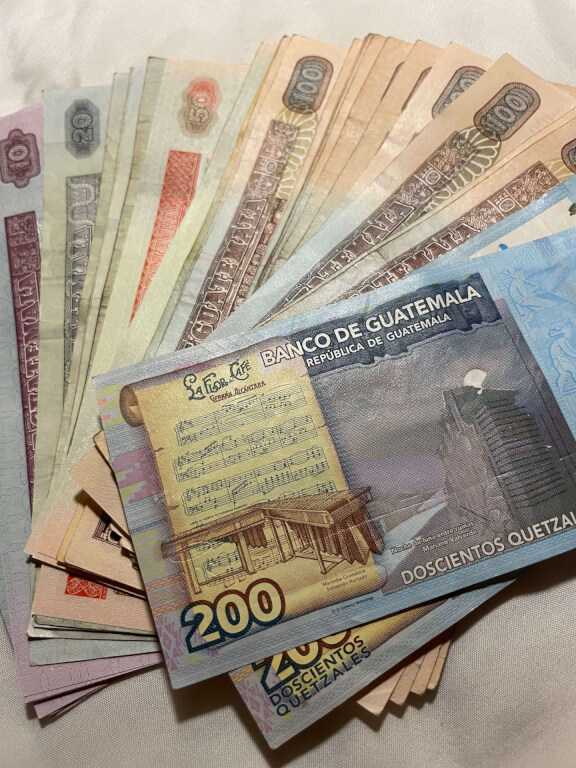
Guatemala is 1 of 7 countries in Central America. Their currency is the Quetzal, which is named after their iconic and stunning little green and red bird. Less of a tip and more of an idea to plant, I always keep a little change for a souvenir at the end of my trips. Especially with commerce sliding more and more online, it’s a neat tangible momento. I’ve also heard it said that you’ll have good luck if you start your next trip with money leftover from the previous one!
Pro Tip: Quetzales can be difficult to secure. Don’t leave getting cash to the last minute (like I did – oops!) and end up having to drive to another city to get it or buy some at an overpriced rate at the airport. In fact, if you can avoid it, never get your currency at an airport – or a bank for that matter. Instead, visit a currency exchange business, compare rates, and arrive with money in your pocket.
Saving Money with Wise
I love saving money. For the past decade or so of roaming the world, I’ve become an expert on budget travel. With years of experience, I’ve learned multiple money savvy tips. It’s why I started using Wise, originally called Transferwise, when I was living on a Korean island to send money home without paying exorbitant bank fees. Today, Wise has expanded their services to include some really awesome features that are perfect for travellers like me and you.
Pro Tip: The Wise Debit Card can be used like a Visa or Mastercard debit card. It’s super slick and easy to bring on the road! Travellers can spend money in over 40 currencies, again with the mid-market rate conversion, and are also able to withdraw cash twice a month from ATMs without having to pay annoying fees. It’s a cheaper alternative to traditional bank cards. Another neat feature of the Wise Debit Card is that you can easily freeze and unfreeze the card through their app. For all of the travellers reading this blog post, the digital nomads living and working anywhere their heart desires, or the folks who love to indulge in international online shopping, this is a super cool money-saving option.
The Wise Account is a free (!) multi-currency account for over 40 different currencies. Yup, several different currencies held in one account! It’s an awesome choice for digital nomads like myself, international students, retirees moving abroad, or people who live in multiple countries. Currencies are converted at the mid-market exchange rate and Wise’s fees are always super low.
Transportation in Guatemala
Uber or Taxi
It’s recommended by locals and the guides you’ll read online to use Uber or taxis when travelling in Guatemala City. Make sure to download the app before you arrive so that it’s accessible when you land in the airport. Local yellow taxis are another reliable and safe option, as are tuk-tuks.
Bus / Camioneta
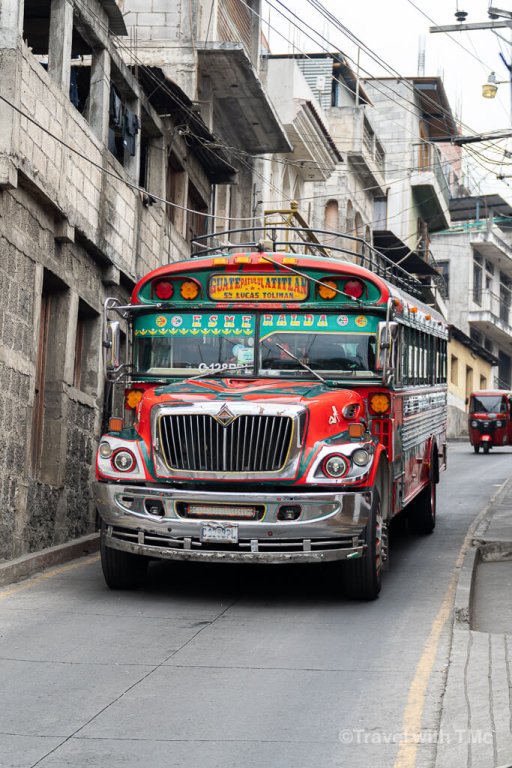
A common delightful sight in Guatemala is the colourful former US school buses. Tourists often refer to them as “chicken buses”, however that term is not appreciated by locals. While chatting in Spanish with one of our private car drivers (I feel real bougie saying that, don’t judge!) he corrected me when I used the term. Instead, do as the locals do and call these colourful buses “camionetas”. These inter- and intracity buses are a common local transportation option. For travellers, it’s a budget-friendly choice and an excellent way to get a taste of local life.
Pro Tip: To hop on the bus, stand at a bus stop or along a route where it looks like you’ll get picked up. There are often line-ups of people there if you don’t see a sign. Pay the fare collector at the front of the bus.
Driving
Canadians who are visiting Guatemala are allowed to use their Canadian driver’s licence, according to the Government of Canada’s travel page for Guatemala. You may prefer to get an international driver’s permit (available at CAA), however it’s not required. If you’re thinking of driving within Guatemala, keep in mind that almost all car windows are quite darkly tinted, incase that impacts your sight.
Here are a few tips to get you started on driving in Guatemala:
- Don’t be surprised that signalling and traffic laws aren’t as strict as in North America.
- Passing, regardless of vehicle size and line indications, often happens when drivers “aren’t not supposed to pass”.
- Keep a good distance from the vehicles around you as they sometimes stop suddenly, rules aren’t adhered to in the same way as you may be used to, and sometimes vehicles are missing items like headlights (not usually in the city though).
- It’s better to drive during the day than at night for several safety reasons.
- Always check your mirrors for motos – they’re cyclists x100.
- Have cash on hand for the toll roads.
- Beware of the speed bumps – known locally as tumulos – which appear often and can be unmarked.
- Go with the flow! Pay attention to how everyone else is driving and try to adapt your style to the location.
Where to Stay in Guatemala
Where to stay in Guatemala will depend on your budget, desired activities, and the length of time you have available for your trip. In general there is a “circuit” that people travel through, or certain areas that tourists tend to visit. In no particular order, they include Guatemala City, Flores (Tikal), Antigua, El Paredón, Lake Atitlán, and Semuc Champey.
Pro Tip: Try a variety of accommodation in Guatemala – or anywhere you travel. It’s a great way to gather different perspectives as a visitor in a new place. I stayed in hostels, Airbnb, a homestay, and a friend’s family’s home. All were fantastic for very different reasons.
Guatemala City
There are certain safer neighbourhoods in Guatemala City that it’s advised travellers book accommodation: Zone 1, Zone 4, Zone 9, Zone 10 and Zone 16 (Cayalá). On my trip, I stayed in Zones 4 (hostel) and 10 (Airbnb). I liked Zone 4 better than Zone 10 because of the art and cafes, though Zone 10 is very popular with many tourists. I go into further depth on each zone on my blog post: Where to Stay in Guatemala City.
Antigua
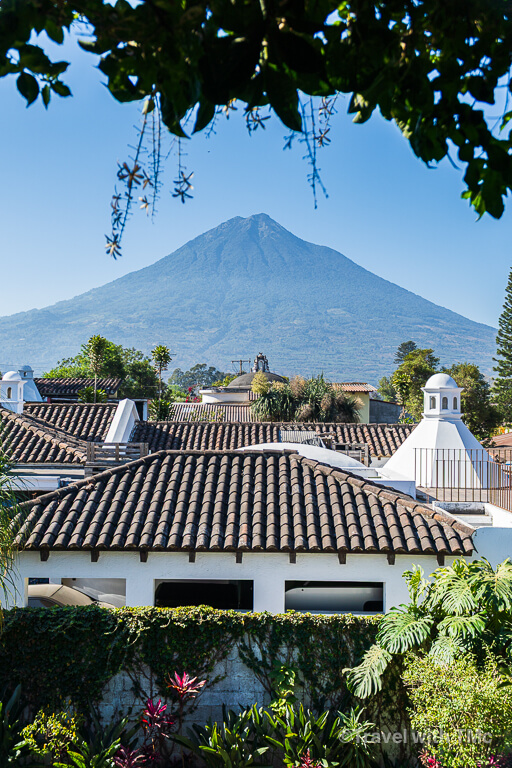
Antigua is a very walkable city, so I imagine most anywhere you book will be fine. We stayed in an Airbnb a few minutes walk from the city centre and it was perfect. Scratch that, it was unreal. All 3 of us couldn’t stop exclaiming at how big the property was (it was understated in the listing). The best part of the whole place though, was the volcanic view below. Imagine eating breakfast or working or reading a book and that’s your view. Just incredible! If you’d like the Airbnb listing, send me an email at [email protected] and I’ll be happy to share it with you!
Lake Atitlán
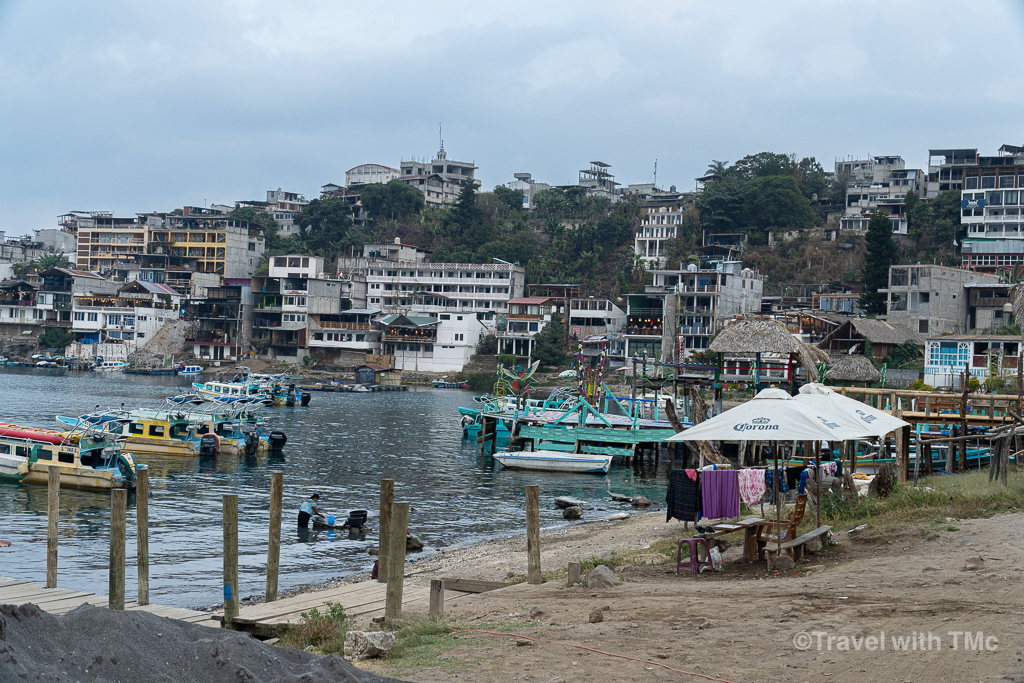
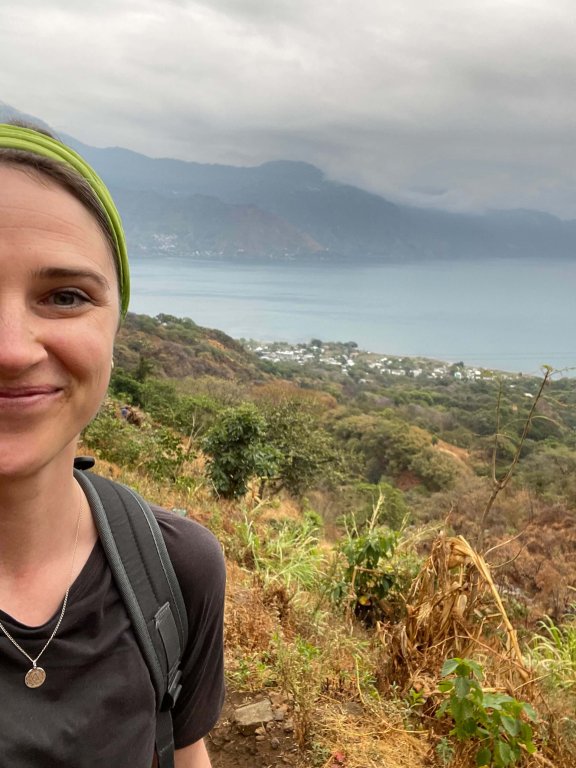
Lake Atitlán has several different pueblos, or villages, each with a very unique vibe. Many people, myself included, go to San Pedro La Laguna to take Spanish classes and stay with host families to further encourage their language learning. The homestay was hands down my favourite accommodation experience of the whole trip and I would highly recommend it to anyone considering it. I go more into that experience on my blog post on Learning Spanish in Guatemala. San Pedro La Laguna is also where many backpackers stay.
Another pueblo, San Marcos, has a total hippy vibe – think Bali in the 2010s or the nomadic yoga chill surfer folk. Panajachel and Santiago are other options to stay in as well. Panajachel is like the tourist hub of Lake Atitlán because of its size and access to transportation that connects to other Guatemalan cities. I go into more depth on each of the different villages to stay in Lake Atitlán here.
El Paredón
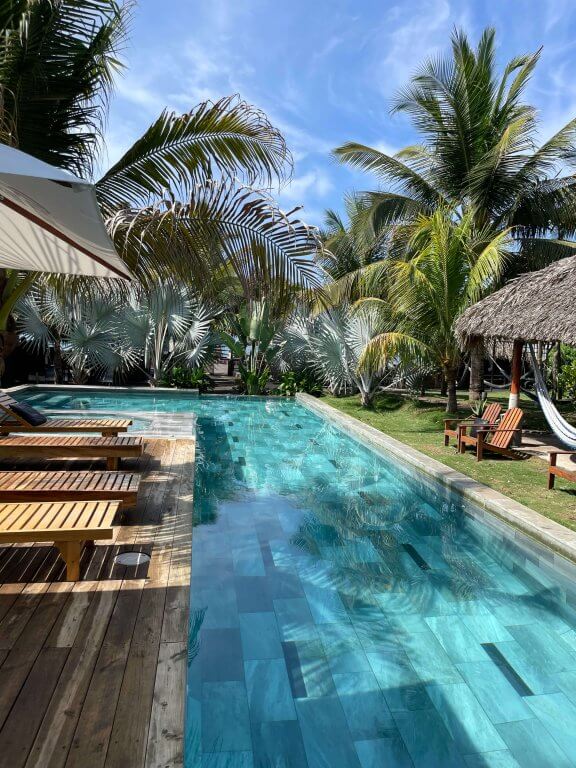
El Paredón is a small, walkable seaside community. It’s comparable to the size of a few neighbourhoods and super easy to get around. There are a couple of different accommodation options, including a few Airbnbs and hostels. I stayed at Cocorí Lodge Hostel which had a pool, restaurant/bar, surfboard rentals, and even surf lessons! There are plenty of restaurants and cafes to choose from, though the main attraction for people is the beach.
What Kinds of Accommodation to Book in Guatemala
For different types of affordable accommodation, there’s Airbnb and VRBO for vacation home rentals or Hotels.com for discounted hotel stays. Hostelworld is an excellent website to research and compare hostel options.
If you’re looking for a more personable stay, consider seeking out a cozy B&B like Casa Carmel Bed and Breakfast. There are also many unique hotels, such as the sleek and colourful Hyatt Centric in Guatemala City, the very zen La Inmaculada Hotel in Guatemala City, or this super cool A-Frame at Cabañas Alpinas Jadeita Resorts in Guatemala City.
Book These Activities in Guatemala
Guided Tours
Museums
Outdoor Activities
- 2-Day Acatenango Volcano Hike
- ATV Mountain Tour + Hobbitenango Entry Ticket
- Bacalar: Calakmul Ruins Day Trip + Jungle
Food & Drink
Guatemala Travel Guide BONUS Downloadable Map
Want to make your trip planning even simpler? Check out this bonus Guatemala Travel Guide downloadable map!
Sneak Peek of Your First Trip to Guatemala
Curious to preview your itinerary? Have a sneak peek here! Still have questions about planning your first trip to Guatemala? Send me a DM on Instagram or through my website contact page and I’ll be happy to help where possible.
Subscribe and Stay in the Loop!
Stay tuned to all things vanlife, international travel, and learning how to pay yourself to travel like I do by subscribing to the (nearly) monthly newsletter and joining the adventure on Instagram. Thanks for reading!
Helpful Tips for Booking Your Trips
Flights
If you want affordable flights, you must get into the points and miles game. Check out my Points and Miles Travel Coaching services to help Canadians fly for less than a tank of gas!
Car Rentals
To help you explore new destinations, turn to Discover Cars for a huge range of vehicle options and excellent prices.
Accommodation
There are so many options for affordable, comfortable, and unique accommodation. Some of my favourite accommodation options are housesitting and hostels. I’ve been using Trusted Housesitters and Hostelworld for years. If you prefer hotels, then check out Booking.com.
Activities
Get Your Guide is a fantastic resource for different activities to try when travelling. They have everything from walking tours, food tours, tickets to attractions, and multi-day trips, and more. Check out this super cool view I had of Helsinki when I was in Finland for the Christmas markets. My favourite GYG tour so far was the fantastic walking food tour I did in Dublin. That experience had a wild twist, but you’ll have to read this blog post to find out why!


