
I’ve said it once, I’ll say it again. If I could eat for a living, I would. I’m not talking about being a food critic. I mean a professional taste-tester. Wouldn’t that be the ultimate career? While working with MP TOURS as a photographer and social media manager on their inaugural Portugal itinerary I nearly felt like I realized that dream, eating all sorts of Portuguese delicacies. Below I’ve compiled a list of items I tried, as well as those I can’t wait to try on my next visit. Which of these mouthwatering Portuguese food and drinks will you seek out on your vacation?

✅ TLDR: Short on time? Here are my top finds for your Portugal trip!
🛎️ Find awesome Portugal hotels
🚙 Rent a car
🎟️ Book the best tours
🥦 Secure travel insurance
🛍️ Shop my favourite travel products
🌟 Follow Travel with TMc on IG
Disclaimer: This post includes affiliate links. At no extra cost to you, these links provide a small commission to allow this website to continue building helpful and interesting content for you. Thank you for supporting Travel with TMc, whether through sharing the content you enjoy or using the affiliate links. It is much appreciated!
Where is Portugal?
Portugal is the European country located a little north of Africa. It’s situated between Spain and the Atlantic Ocean.
Top Portuguese Drinks to Try
Before we dive into this delectable list of the top Portuguese food and drinks to try on your trip, one last note. If planning stresses you out, and finding restaurants isn’t your thing, then consider taking a food and drinks tour. There are plenty to choose from, some of which I’ve curated for you below, depending on the city. I can’t count how many food and drinks tours I’ve been on over the pat 10+ years of travel. Each of them have been deeply satisfying, from the chance to try new flavours, to learning the history behind special dishes, to meeting fellow travellers and locals.
Port Wine
Have you even been to Portugal if you haven’t tasted Port? Okay, yes, I know alcohol’s popularity is on the decline these days. However, unless you’ve sworn off imbibing, this is an absolute must on your Portuguese vacation. More often than not, the production of port is still family-run and handmade. Port is a fortified wine, which means that brandy is added during the fermentation process. This effectively stops fermentation, which causes the grapes to retain sugar and provides the sweet flavour profile it’s so well-known for.
There are several types of port: white, rosé, tawny, and ruby. The lightest in colour is white. It’s a combination of aged and unaged port. Tawny port is brown in colour and aged in wooden barrels. Ruby is the darkest and most of the maturation process takes place once bottled. I can assure you, each of them are delicious and it’s best-advised to leave room in your suitcase for a bottle or two to bring home!
Pro Tip: Head to the stunning Douro Valley, the only place in the whole world that can legally produce “port wine” for a scenic taste testing at any of the family-run “quintas”.

Vinho Verde
Vinho Verde translates to “green wine”. It is light in colour with green fruity notes – think grapes, melons, and pears. The small northern Minho region of Portugal where it’s produced is also one of the country’s oldest, and the largest, wine regions. While the area is sometimes known for cheaper wines, the sought-after vinho verde is a popular favourite. Of the approximately 60 grape varieties in Minho, Vinho Verde is a blend of 6: Alvarinho, Arinto, Azal, Avesso, Loureiro, and Trajadura.
What makes vinho verde distinct, other than its region of origin, is a delightful fizziness. Originally this occurred because fermentation would finish in the bottle. Today, however, most vinho verde is artificially carbonated. Few producers skip carbonation completely.
Pro Tip: Try it with the fizziness! It’s such a light, airy wine and the fizziness adds another dimension to the taste.
Super Bock (Beer)
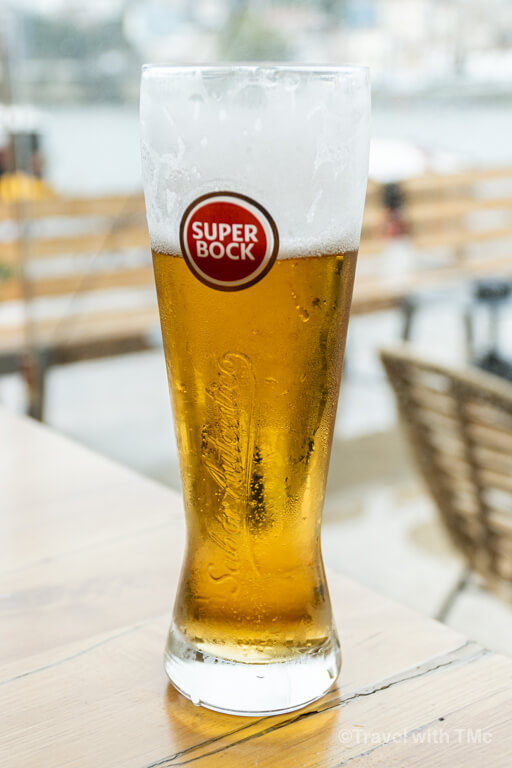
Though I am not a beer drinker, I imagine a crisp cold beer is pure heaven on hot summer days in Portugal. First created in 1927, the award-winning Super Bock is a citrusy medium-bodied lager that pairs perfectly with tapas, meat, fish, salads, and croquettes. It’s probably just as satisfying enjoyed on its own while basking in the sun on a boat or patio.
Pro Tip: “Cheers” in Portuguese is “Saúde”!
Ginjinha
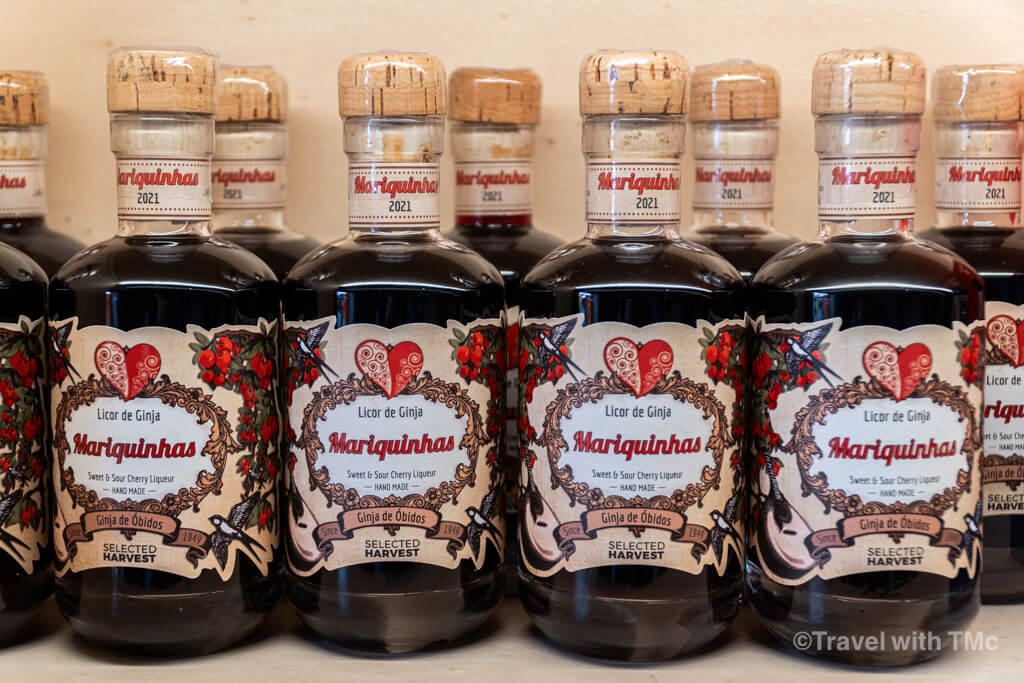
Ginjinha is served in tiny chocolate cups. That’s it. That’s all you need to know. Chocolate and liquor, yum! Okay, fine, it’s also neat to learn that it was invented in the village of Sanguinhal and is a sour cherry liqueur infused with ginja berries. Not only has the recipe been untouched for centuries, but the tavern/grocery store it was invented in is still open!
Pro Tip: This can make a great souvenir as it’s often sold in mini bottles and in gift sets.
Top Portuguese Foods to Try
Caldo Verde
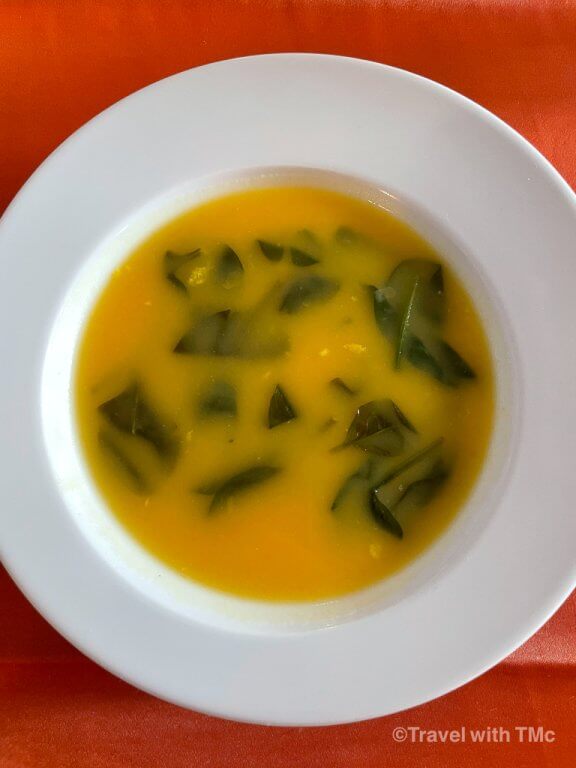
Soup’s ready! It appears that the Minho region really loves the colour green. In addition to laying claim to Vinho Verde, one of Portugal’s most popular soups – Caldo Verde – is also from the north.
A celebratory dish often served at birthdays and weddings, the creamy Caldo Verde is made with kale, potatoes, chorizo, and olive oil. Broa, a corn and rye bread, is served on the side for dipping.
Pro Tip: This is the perfect recipe to make back home when it’s cold outside.
Ostras (Oysters)
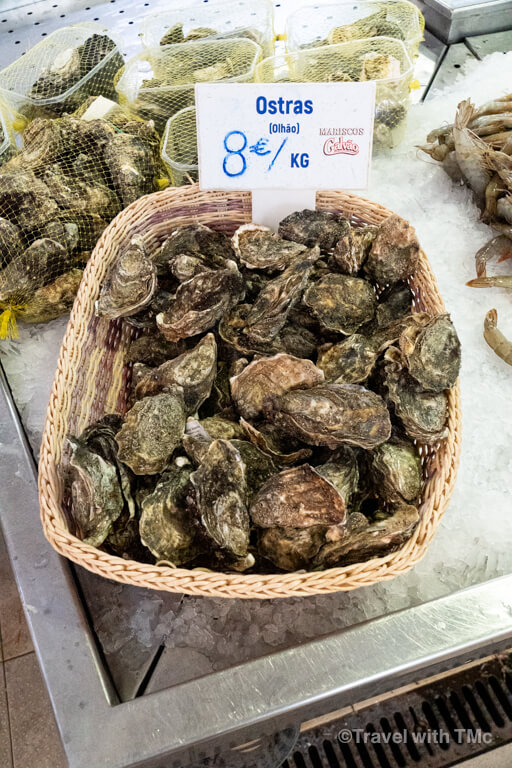
White wine. Fresh oysters. Sunshine. That is all.
Pro Tip: Always include a market day whenever you visit a new country. There’s no better way to try the freshest food and meet the locals.
Croquette
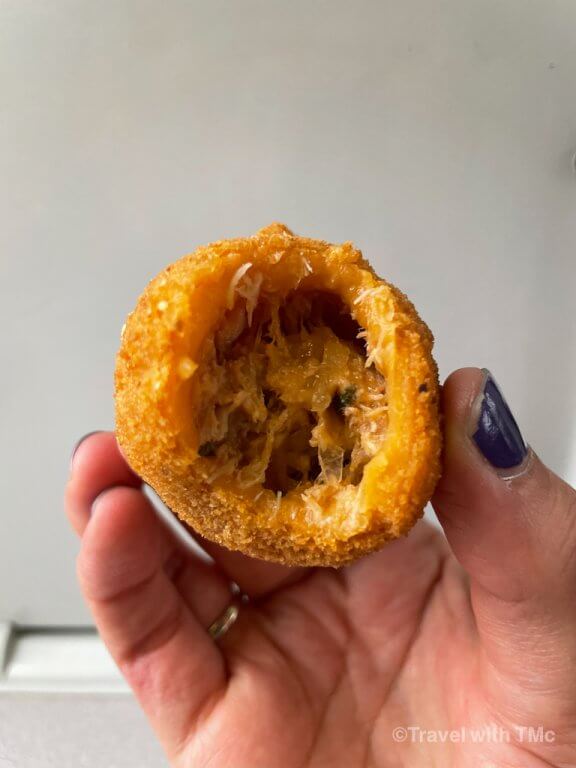
Alright, I must admit, I only tried the grocery store Pingo Doce version of the Portuguese croquette. True, it was not the most gourmet experience to write home about. Also true, it was the perfect cheap and cheerful choice while transiting between Almada and Lisbon. In 2013 I became enamoured with Spain’s croquetas and can confirm that while they are considered “snacks” or “side dishes”, regardless of where you eat them, eat enough and they’ll constitute a “meal”.
You may be asking, what is a croquette? To that I would say, it is a little mouthful, round or oblong, of fried flavour bursts. The most most traditional Portuguese croquette is the beef, or “croquette de carne”. Similar to elsewhere, however, they can be stuffed with just about anything – cheese, meats, seafood, etc…
Pro Tip: Don’t discount the Pingo Doce croquette. Definitely also look for them on proper restaurant menus.
Franceshina
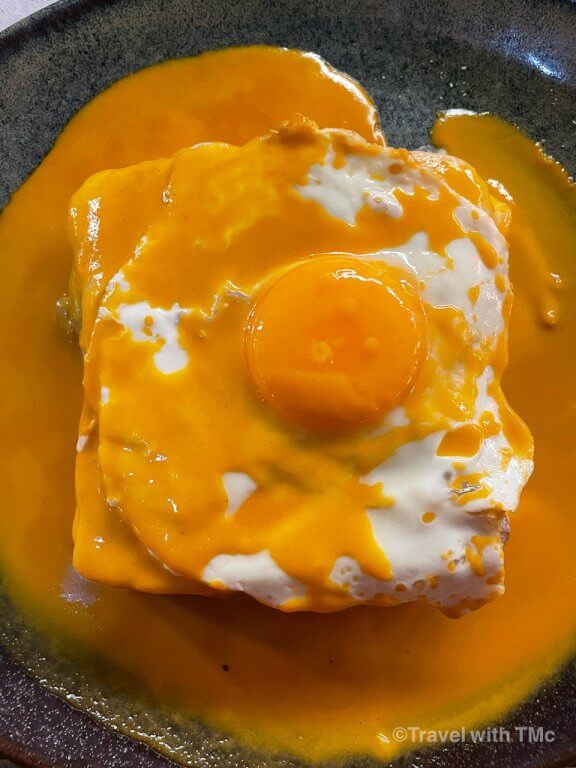
This is the first Portuguese dish I tried while on tour with MP TOURS. It was late at night and I was warned that it was a heavy dish, but all I could think was there’s no time like the present to start crossing off new Portuguese foods I wanted to try!
Anthony Bourdain is quoted as saying Franceshina is the perfect hangover dish and after consuming this mountainous decadence, I understand why. Thanks to Daniel David de Silva, the Porto invention is layer after rich layer of meat, cheese, sauce, and bread. I surprised myself and the table of travellers by finishing it! To paint you a clearer picture, imagine cured meats, steak, a rich and somewhat spicy tomato and beer sauce, melted cheese, and a fried egg melting in your mouth with each bite. Let me just say, the gluttonous marathon was worth the effort.
Pro Tip: Apparently, Franceshina pairs perfectly with a beer, which makes me question its status as a hangover cure. Then again I’m from Canada where a Caesar lays claim to the same fame…
Bifana
Pork, garlic, paprika, and white wine…in a sandwich. Those are the simple yet deeeelicious ingredients of the traditional bifana sandwich, one of Portugal’s most iconic handy meals. Variations include tomatoes, fried eggs, cheese, onions, or peppers.
Pro Tip: Venture outside of the capital city of Lisbon and visit Vendas Novas in the Alentejo region where the Bifana originates.
Bacalhau (Cod)
Bacalhau is basically a religion in Portugal. For centuries, the Portuguese have been fishing, drying, salting, and feasting on cod. In fact, during the 16th century Portugal was even labelled as “Terra do Bacalhau” or the “land of cod” on some maps. Drying and salting the cod not only preserved it, but retained its nutritional value. These methods provided a healthy alternative to freshly caught fish when it was unavailable – both to families on land, as well as explorers on long sea voyages. As a Catholic country, bacalhau was also the non-meat alternative during Lent when meat is restricted.
According to the BBC, Portugal consumes 20% of the world’s cod making it the top cod-eating country in the world! Funnily enough, the majority of it comes from Norway, Iceland, and Newfoundland. In fact, the Portuguese have been fishing for along Canada’s borders since the 1500s.
Pro Tip: Bacalhau dishes vary from region to region – so try them all!
Bacalhau à Brás
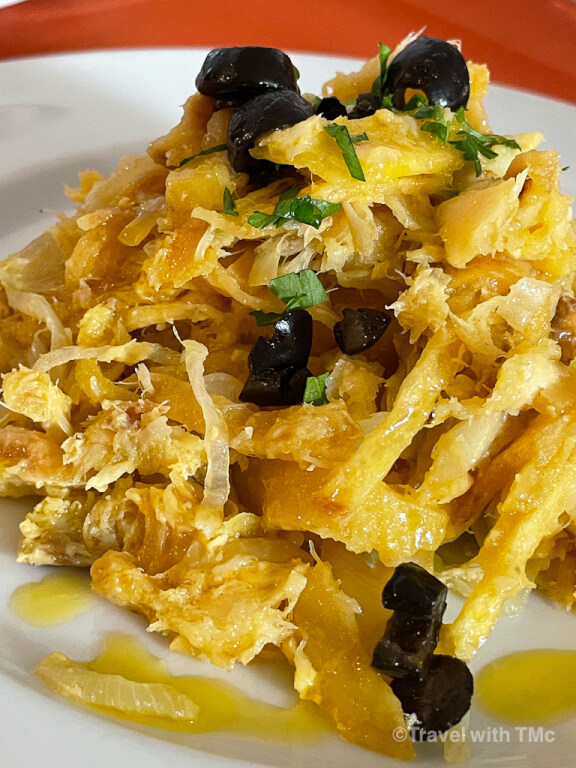
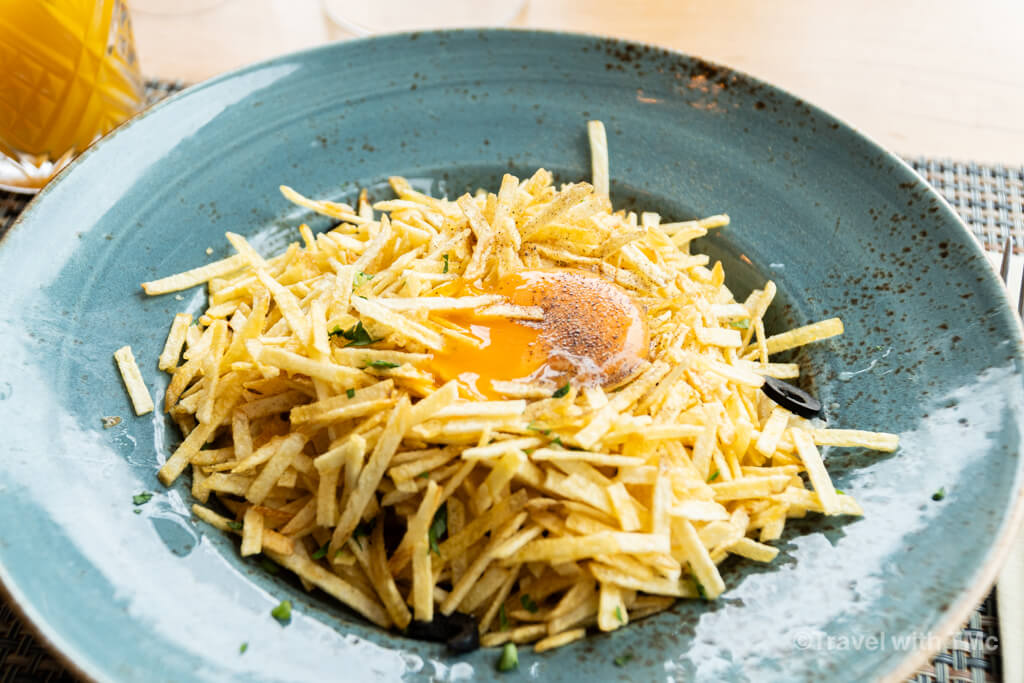
Though this list is in no particular order, this dish is truly the top Portuguese food to try on your visit. Bacalhau à Brás is a classic Portuguese comfort food made with salted cod (bacalhau) shredded into bite-size pieces, eggs, onions, and thinly-sliced crispy potatoes, and garnished with black olives and parsley. Thanks to Braz, a tasca owner in Lisbon’s Bairro Alto, the dish was born in the first half of the 20th century from a “never waste” mindset.
Though you can’t see the bacalhau buried beneath the crispy potatoes and egg in the photo, I can assure you there was plenty below!
Pro Tip: Today, Bacalhau à Bras is best enjoyed in a traditional mom-and-pop tasca where simplicity and warm hospitality make for the best meals.
Sardinhas Assadas
Sardinhas Assadas or “grilled sardines” are another staple of Portuguese cuisine. As a coastal country, Portugal knows how to do seafood well. Sardinhas assadas come from the Lisbon and Vale do Tejo regions and are always on local festival menus. There are even traditional sardine festivals! Think open air grills, sea air tickling your skin, and fresh salty sardines ready to be devoured. Now that’s a way to spend an August day.
Pro Tip: Don’t worry if you’re not visiting Portugal in August. There are plenty of restaurants and places to try sardinhas assadas throughout the country year-round.
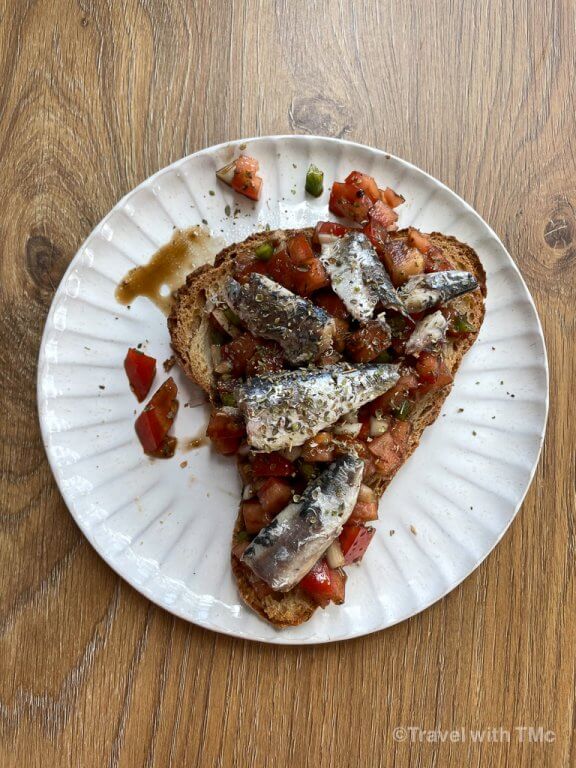
Arroz de Marisco
Seafood makes it onto the top foods list again with Arroz de Marisco. This seafood rice dish was once named to the 7 Wonders of Portuguese Gastronomy list, indicating just how important it is to Portuguese culture. Depending on the location, the combination of mussels, prawns, clams, cockles, crab, shrimp, squid, and lobster will change.
Pro Tip: Arroz de Marisco is a communal dish and best shared at a table with your favourite people.
Piri Piri Chicken
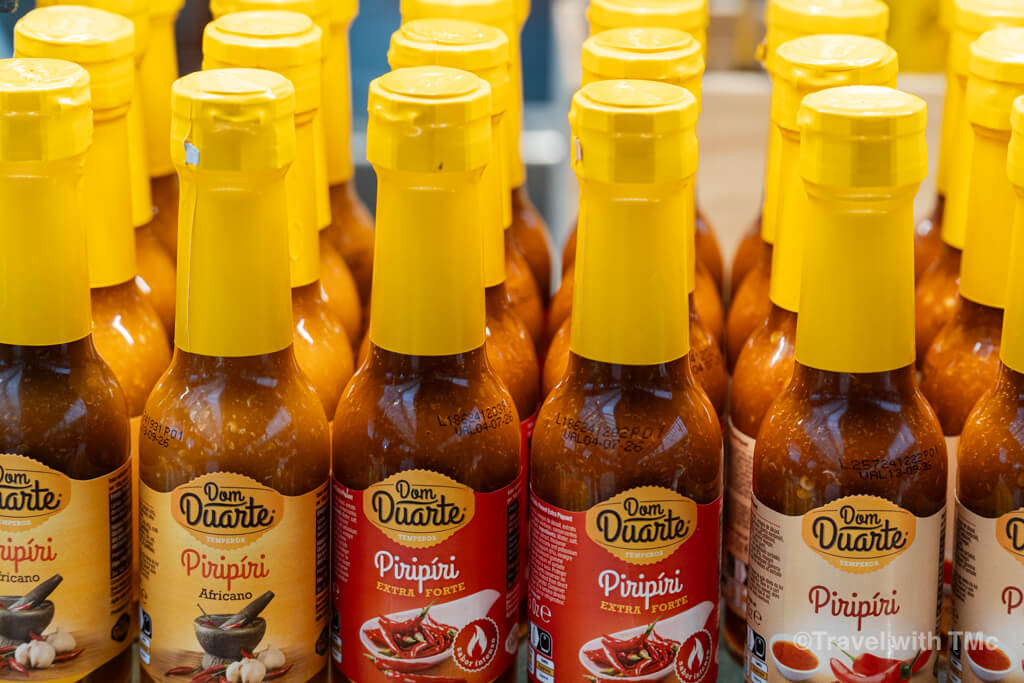
A popular dish in the Algarve, Piri Piri Chicken wasn’t my favourite but I’d still say give it a try when you’re in Portugal. Locally known as “frango assado”, the spatchcooked (butterflied) chicken is then grilled and coated in spicy piri piri sauce. Pair it with vinho verde or Super Bock.
The famous chilli pepper sauce is centuries old, and its history is intertwined with Portuguese trading and colonialism. With a multitude of variations in name around the world (piri piri, peri peri, pili pili) and ingredients, it’s one for the list in Portugal, as well as Africa.
Pro Tip: This dish has more than its spicy kick to offer hungry travellers. Dive into its far-reaching history to layer each bite with a better understanding of how this popular Portuguese plate came to existence.
Pastel de Nata
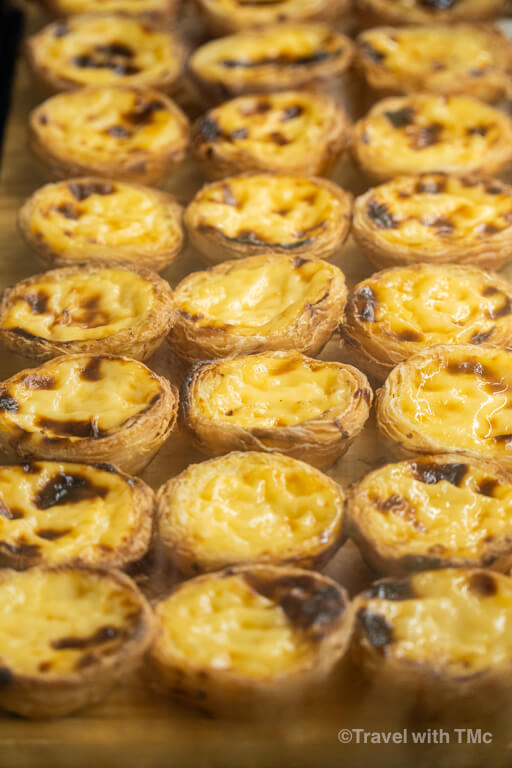
Let me start by saying that, in general, I’m not a fan of custard. Welp, I was forced to eat my words when I tried my first pastel de nata. Maybe it’s because I was on a summer sunset cruise, albeit while working, but does that even change the first part of this sentence? No. The pastel de nata I tasted was light and, quite frankly, heavenly.
The world has Pastéis de Belém, a family-owned bakery in Lisbon for the past 4 generations, to thank for the gift that is Pastel de Nata. The tart’s history goes back to a nearby monastery, however it is said that Pastéis de Belém put it on the map. I really don’t think there’s more to say about these handmade pastries, other than do not miss them on your Portugal trip.
Pro Tip: Just try one…or three…even if you think you don’t like custard or tarts! You might also be pleasantly surprised!
Bolo de Arroz (Bolinha)
Don’t let the translation fool you. This “rice muffin (or cake)” is a delightful little dessert. Thanks again to trade routes and the intermingling of cultures, it’s believed that the Portuguese were gastronomically inspired while in Asia during the 15th century. Similar to Asia, rice is also a principle character in Portuguese cuisine. Lemony and buttery, typically wrapped in parchment paper, and with a contrasting crunch on top, Bolo de Arroz is often paired with a coffee or tea and a side of people watching.
Pro Tip: Starting your mornings in Portugal at a cafe savouring a bolo de arroz will induce happy thoughts.
Ovos Moles
The coastal city of Aveiro is home to this beloved and simple two-toned treat. Outside, a colourless wafer shell in maritime-themed shapes. Inside, a rich explosion of sweetened yellow egg yolk. “Ovos Moles” translates to “soft eggs” and while you may not think “dessert” at the mention of soft eggs, you will understand the sweet confection’s appeal once you try it.
Pro Tip: These make an excellent host or thank you gift.
Fresh Fruit
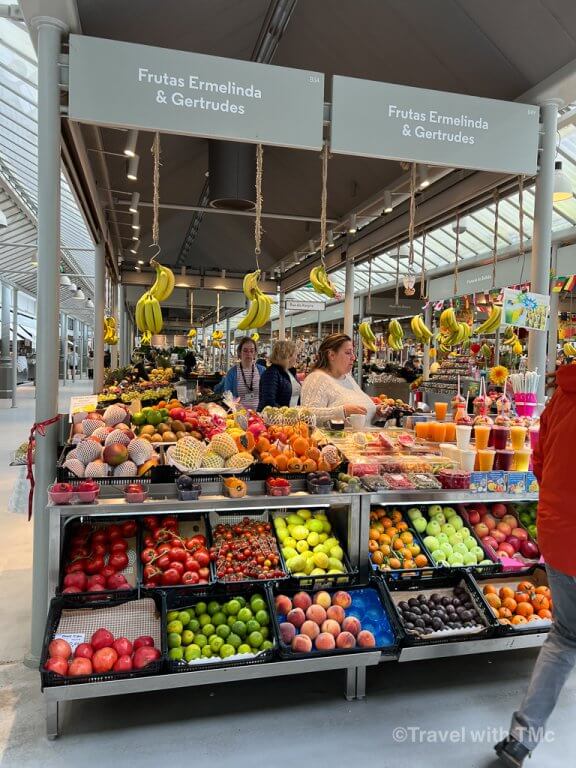
As a Canadian, one of the greatest delights I get when eating abroad is trying new fruit, right from the source. You cannot beat fresh fruit, available in the country it was grown in. There is a long list of fruit to try in Portugal. To keep things succinct and to spark your list, put these ones at the top: Pineapple, São Miguel passion fruit (Maracujá dos Açores), figs, green melons (melão verde), pears (specifically the Pêra Rocha), persimmons, and oranges.
Pro Tip: Visit Porto’s Mercado do Bolhão for fresh fruit and smoothies
Conservas (Canned Fish)
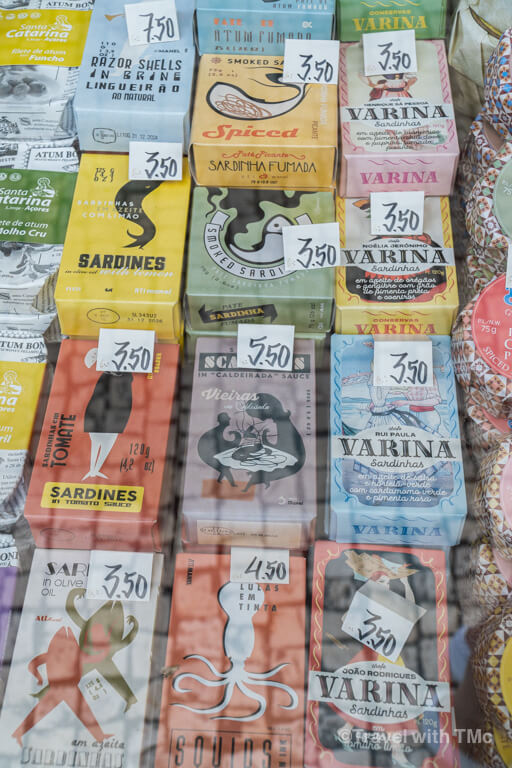
There are some souvenirs that are downright tacky and there are others that are uniquely perfect to a place and must accompany you home. In my opinion, the colourfully boxed variety of Portuguese conservas fall squarely into the latter category. The aesthetically packaged canned fish can be found all over in gourmet shops, beckoning you to fill your tote bags.
To be clear, the Portuguese have been preserving fish for centuries. They’re the pros. Ramirez, Europe’s oldest commercial cannery and the first to open in Portugal, has been open since 1853. On top of this lengthy history, conservas are a healthy and economical food for locals; they’re not just there to impress the visitors.
Pro Tip: Make it a trip mission to try them all! There’s cod, mussels, octopus, squid, razor clams, sardines, you name it.
Local Chip Flavours
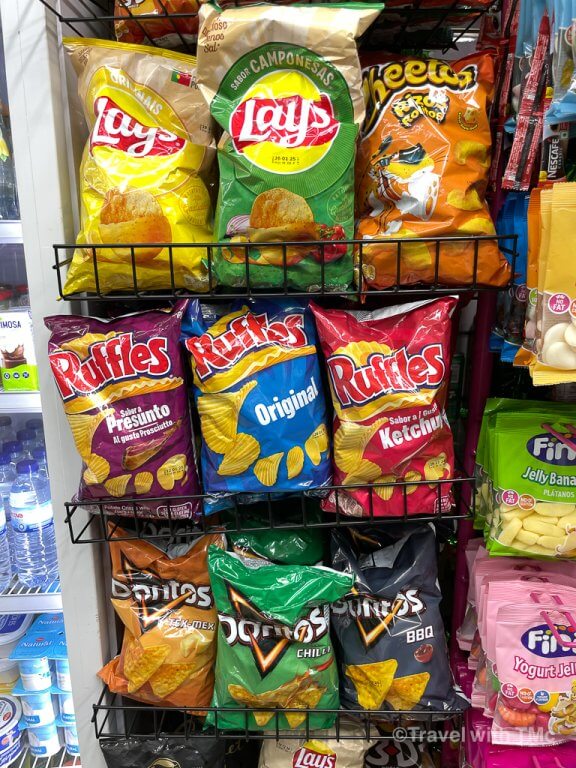
Okay, this is more of a fun suggestion and something I tend to search out in new countries. Perhaps similar to those who try McD’s around the world, I like trying different flavours of chips. I’m not even a huge fan of the crunchy snack (I’m more of a chocolate lover). It’s just interesting to see what’s out there.
Pro Tip: Try a few flavours with a friend and compare what you each like better.
Plan Your Visit to Portugal
To best answer all of your questions about when’s the best time to visit Portugal, how to get there and more, read this detailed blog post I wrote about everything you need to plan your visit to Portugal. It’s an excellent complement to this foodie-focused blog post.

Subscribe and Stay in the Loop!
Stay tuned to all things vanlife, international travel, and learning how to pay yourself to travel like I do by subscribing to the newsletter and joining the adventure on Instagram. Thanks for reading!
Helpful Tips for Booking Your Trips
Flights
If you want affordable flights, you must get into the points and miles game. Check out my Travel Coaching services to help Canadians fly for less than a tank of gas!
Accommodation
There are so many options for affordable, comfortable, and unique accommodation. Some of my favourite accommodation options are housesitting and hostels. I’ve been using Trusted Housesitters and Hostelworld for years. If you prefer hotels, then check out Booking.com.
Activities
Get Your Guide is a fantastic resource for different activities to try when travelling. They have everything from walking tours, food tours, tickets to attractions, and multi-day trips, and more. Check out this super cool view I had of Tallinn when I was in Estonia for the Christmas markets, all because of a Get Your Guide experience. My favourite tour so far that I’ve been on with Get Your Guide is a fantastic walking food tour I did in Dublin. That experience had a wild twist, but you’ll have to read this blog post to find out why!


